
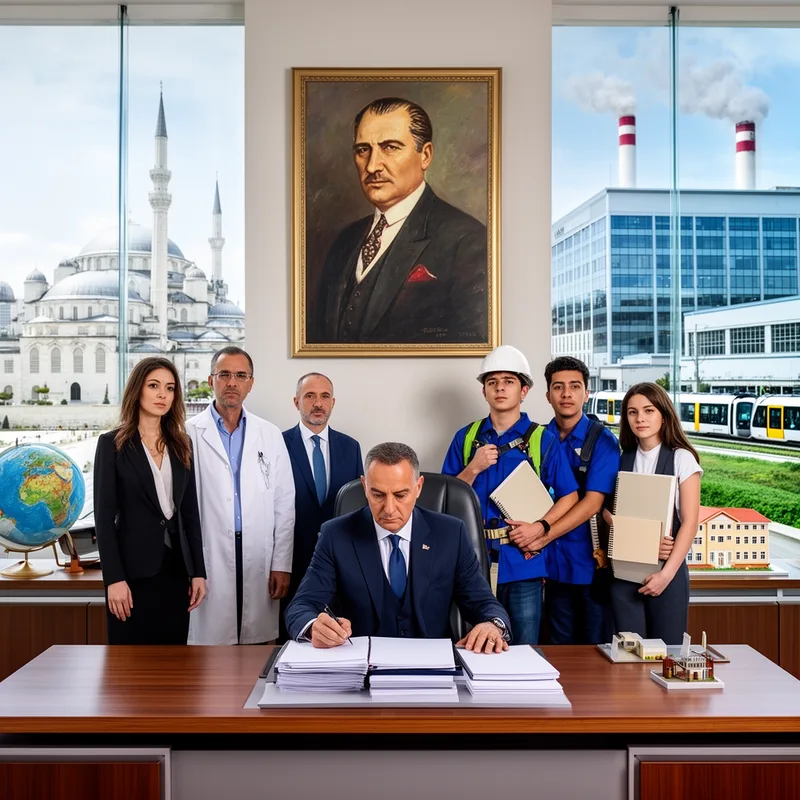
Kemalist
 1
8.6

- adjective
- /ˈkɛməˌlɪst/
- The government implemented a series of reforms to promote Kemalist values, emphasizing secularism and modernization.
Examples
-
It has created fear in the minds of the guardians of Kemalism and, in their view, has polarized society into separate secular/Kemalist and Muslim/Islamic factions.
Academic text (2000) -
Adherents of the 28 February policies and high-ranking military members in charge during the following period adopted a style of action reminiscent of radical Kemalist identity and the leftist Kemalism of the 1970s, and they became increasingly a part of daily political life.
Academic text (2000) -
The soul of white Turkey and its Kemalist identity is in constant pain and conflict with the national body politic of Turkey.
Academic text (2000) -
Many Turkish citizens celebrated the anniversary of the Kemalist revolution, which established a secular state in Turkey.
-
In discussions about Turkish history, the influence of Kemalist ideology on contemporary society is frequently acknowledged.
Surface Forms
Morphology
Kemalist = Kemal (transparent) = Kemal + ist
The adjective is formed by the productive suffix '-ist' on the proper name 'Kemal', yielding an adjective meaning 'relating to the ideas or policies of Kemal', which is directly inferable.
Etymology
Kemalist comes from the name of Turkey's founder Mustafa Kemal Atatürk and the ending -ist, which means 'someone who believes in' like in artist. So a Kemalist adjective describes ideas or policies that follow Atatürk's reforms such as secular government, national unity, and modernization.