
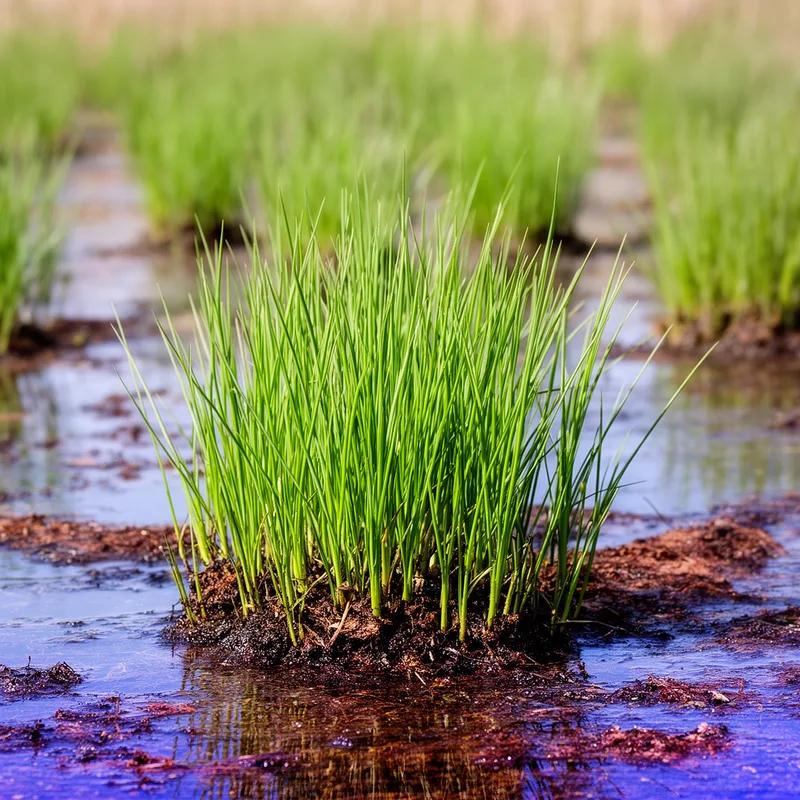
Juncaginaceae
- noun
- /ˌdʒʌŋkəˈdʒɪniˌeɪsiˌi/
- Specialized
- Many botanists classify arrowgrasses under the family Juncaginaceae.
Examples
-
The Juncaginaceae family includes several species adapted to wetland environments.
-
The Juncaginaceae are found primarily in marshy or boggy environments across temperate regions.
-
Research on the Juncaginaceae family has provided insights into wetland plant evolution.
-
Many plants in the Juncaginaceae family thrive in boggy conditions.
-
Many botanists classify arrowgrasses under the family Juncaginaceae.
-
Research on the Juncaginaceae family has provided insights into wetland plant evolution.
-
The Juncaginaceae are found primarily in marshy or boggy environments across temperate regions.
Synonyms
A group of small grass-like plants that grow in wet places such as marshes
Surface Forms
Morphology
Juncaginaceae = Juncagin (opaque) = Juncagin + aceae
Formed by a Latin genus stem plus the botanical family suffix '-aceae'; this taxonomic formation is specialized and not derivable by an average B1 learner from English morphemes.
Etymology
Juncaginaceae comes from a Latin word related to juncus, meaning 'rush', plus the plant-name ending -aceae, meaning 'family'. So Juncaginaceae is like the 'rush family', which fits because these are marsh and bog plants such as arrowgrass.

