
Jumma
- proper noun
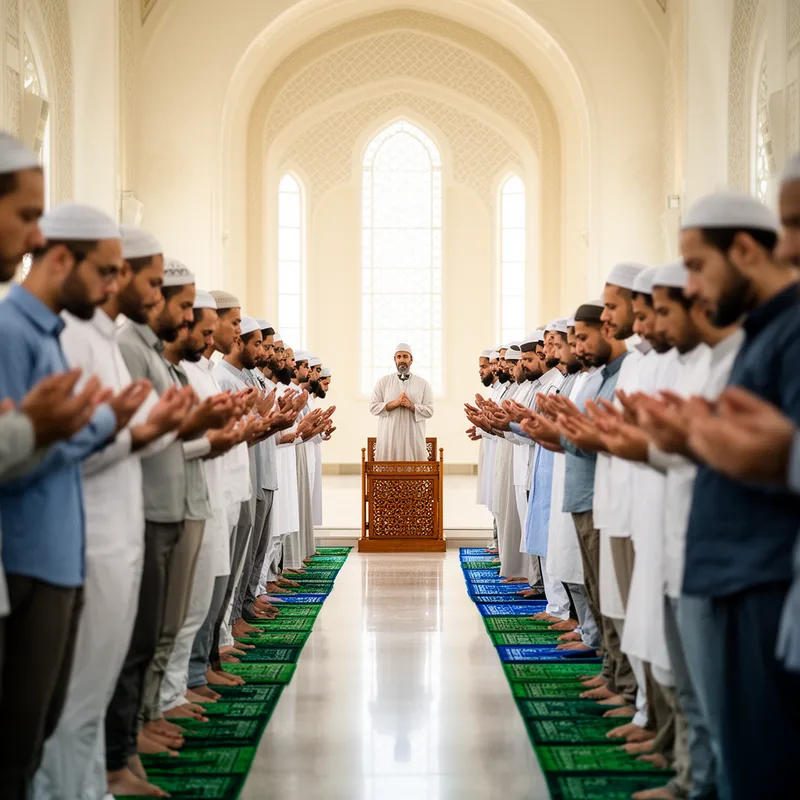
- Every Friday, members of the community gather for the Jumma prayer at the local mosque.
- Jumma refugees
Examples
-
The Jumma peoples from the Chittagong Hill Tracts of Bangladesh are another example of Category I refugees.
Academic text (1997) -
Although the Bangladeshi government promised to return them to their lands, many Jumma are still dislocated.
Academic text (1997) -
For example, the Government of India has denied food to the Jumma as a means of forcing them to return to their homeland.
Academic text (1997) -
It seems as if the status of the Jumma refugees shifted from Category I to Category II.
Academic text (1997) -
The state government of Tripura, in concert with the central government of India, also denies educational facilities to Jumma refugee students.
Academic text (1997) -
In other words, a combination of geopolitical and economic concerns led the Indian government to change its policy towards the Jumma refugees, leaving them with less security in a foreign country than before.
Academic text (1997) -
The SAHRDC conducted a study of camp conditions in 1993 and 1994, which revealed that the Jumma refugees have been systematically denied access to education.
Academic text (1997) -
SAHRDC filed a complaint with the Indian National Human Rights Commission regarding the involuntary repatriation of the Jumma refugees in 1994.
Academic text (1997) -
One month later, the Jumma Refugee Welfare Association, after visiting the Chittagong Hill Tracts, reported that more than 103 families had still not received the land they originally left.
Academic text (1997) -
Ration supplies to the Jumma refugees sheltered in Tripura State have been suspended since mid-1992.
Academic text (1997)
Surface Forms
Etymology
Jumma comes from the Arabic Jumu'ah, meaning 'gathering', so it names the Friday congregational prayer when people meet at the mosque. The same spelling Jumma is also used for an indigenous people in Bangladesh, which is a local name for that community.

