
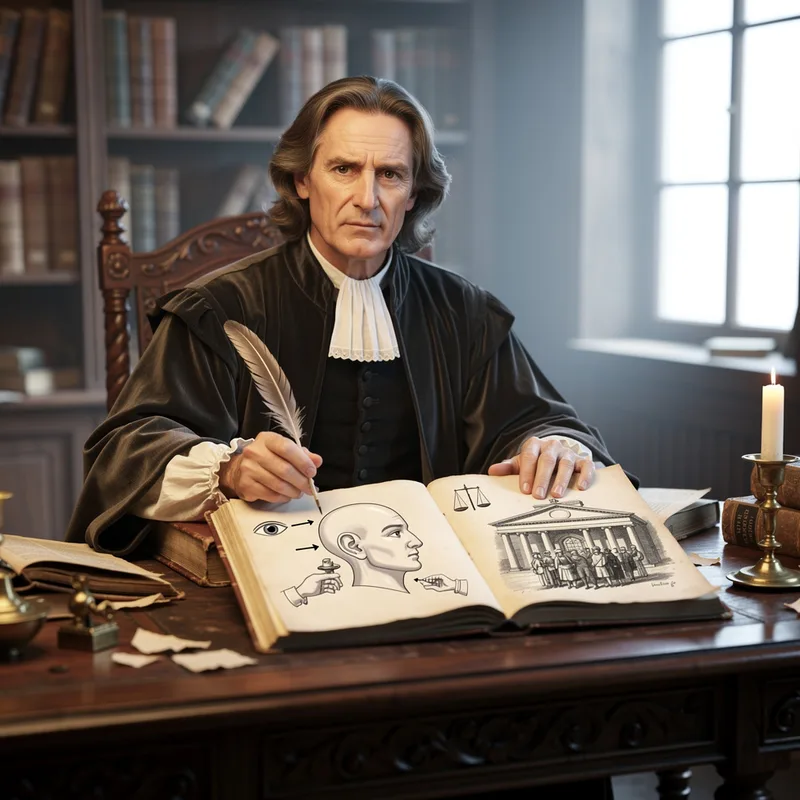
John Locke
 4
5.5

- proper noun
- /dʒɑn lɑk/
- But the framers of the Constitution were well aware of John Locke's warning against delegation of legislative power.
- John Locke's Treatise
- John Locke, the philosopher
Loading YouTube…
Watch on YouTubeYou know, for example, Rene Descartes, Nikolai Malbrosch, you know, Thomas Hobbes, John Locke, all of these people as well.
- You know, for example, Rene Descartes, Nikolai Malbrosch, you know, Thomas Hobbes, John Locke, all of these people as well.
Examples
-
Over two millennia passed before seventeenth-century Englishman John Locke introduced experiential education (the idea that one learns through experience).
Academic text (2003) -
John Locke's Treatise of Government seems more serious about assuring that individuals retain their rights.
Academic text (2003) -
John Locke believed that the only way an individual can learn is through experience.
Academic text (2003) -
John Locke believed that self-preservation and the preservation of other humans were the primary values that law should seek to affect.
Academic text (2016) -
In the realm of political thinking, we find the philosopher John Locke relating a theory about government that was based on natural laws as opposed to arbitrary authority.
Academic text (1996) -
Thomas Jefferson, James Madison, Alexander Hamilton, and St. George Tucker, like John Locke before them, all believed that property was a cornerstone of a free society.
Academic text (2016) -
Swinburne apparently imagines a state of nature similar to that described by John Locke, in which individuals hold an exclusive right to punish those who harm them.
Academic text (2003) -
John Locke, Immanuel Kant, and John Stuart Mill are among the liberal tradition's leading spokesmen.
Academic text (1996) -
A fuller discussion came much later in the work of Thomas Hobbes (1651) and, especially, John Locke (1690) - often said to be the philosophical father of America.
Academic text (2018) -
The ideas of John Locke laid the foundation for modern democratic thought.
Surface Forms
Morphology
John + Locke
This is a proper name referring to a specific fictional character, so knowing the constituent words 'John' and 'Locke' (common given name and surname) does not allow a learner to infer the character's identity or attributes. Proper names are arbitrary referents rather than compositional expressions, so the meaning is not derivable from the parts.
Etymology
John Locke was a 17th-century English thinker who said our minds begin like a blank page and are filled by 'experience'. This image — a blank sheet slowly written by life — helps remember his main idea that knowledge comes from learning through experience.