
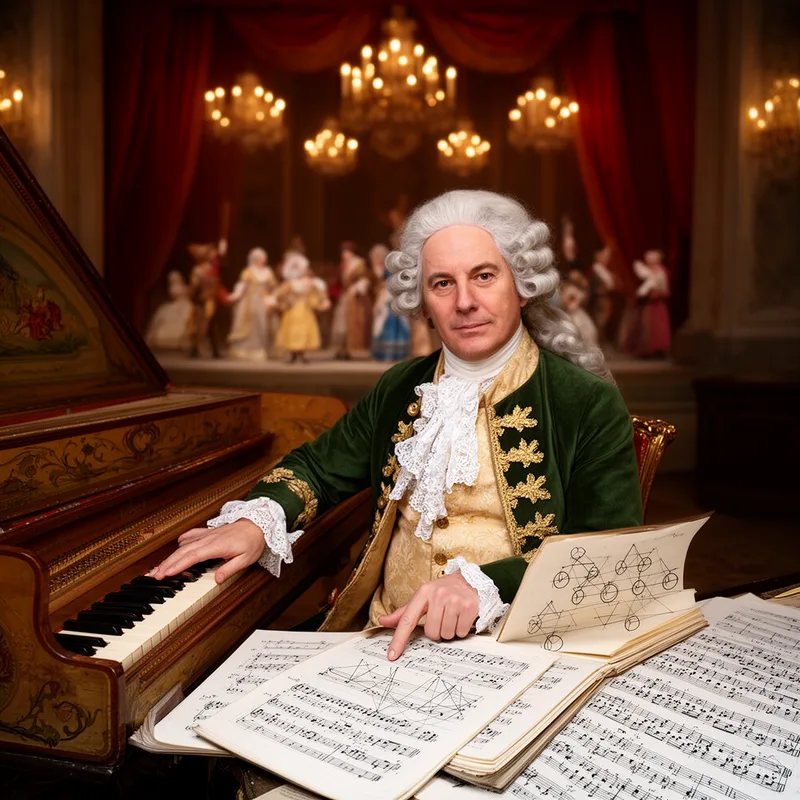
Jean-Philippe Rameau


 1
9.1
- proper noun
- The music of Jean-Philippe Rameau is celebrated for its intricate harmonies and innovative orchestration.
Examples
-
Many music students study the treatises of Jean-Philippe Rameau when learning about Baroque harmony.
-
A production of Jean-Philippe Rameau's opera was featured at the city's summer festival.
-
The works of Jean-Philippe Rameau are celebrated in music history.
-
Jean-Philippe Rameau was a key figure in the French Baroque period.
-
A production of Jean-Philippe Rameau's opera was featured at the city's summer festival.
-
Many music students study the treatises of Jean-Philippe Rameau when learning about Baroque harmony.
-
The music of Jean-Philippe Rameau is celebrated for its intricate harmonies and innovative orchestration.
Surface Forms
Morphology
Jean-Philippe + Rameau
This is a proper name composed of personal-name constituents that carry no general lexical meaning; knowing the parts 'Jean-Philippe' and 'Rameau' does not allow a learner to infer the referent's profession or biographical details. Proper names are referential and arbitrary, so the information that he was a French composer and theorist is not derivable from the constituents.
Etymology
Jean-Philippe Rameau was a French composer and music writer in the 1700s who wrote a famous book that showed how notes and chords work together. Because he explained the rules of harmony so clearly, musicians often call him a 'founder' of modern harmony and his name is still used when people learn about this music.