

Japanese yew
- noun
- /ˈdʒæpəˌniː juː/
- The Japanese yew is commonly planted in gardens for its dense foliage and attractive appearance.
Examples
-
Many landscapers recommend the Japanese yew for hedges because it is easy to shape and maintain.
-
Be careful when handling Japanese yew plants, as all parts are toxic if ingested.
-
The Japanese yew is a popular choice for landscaping.
-
Many gardeners prefer the Japanese yew for its hardiness.
-
The garden features several Japanese yew plants that thrive in the shade.
-
We decided to landscape the backyard with beautiful Japanese yew shrubs for year-round greenery.
-
The park's entrance is marked by a row of healthy Japanese yew trees providing a lovely touch of color.
Synonyms

 5
6.7
5
6.7

An evergreen tree with flat needle-like leaves and red berries often used for hedges

A hardy evergreen shrub or small tree with dark green leaves used in gardens
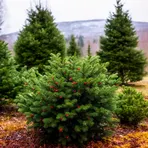
A group of evergreen trees and bushes called yews that grow in cool parts of the Northern Hemisphere
Surface Forms
Morphology
The phrase is fully compositional: 'Japanese' specifies origin/association and 'yew' names a particular tree, so the meaning 'a yew associated with Japan' is directly derivable from the constituents. This ADJ+NOUN origin/species pattern is cross-linguistically common, making it immediately understandable to a B1 learner who knows both words.
Etymology
Japanese yew simply names a type of yew from Japan and nearby China that gardeners liked for its dark, shiny leaves and because it was easy to shape. Gardeners carried it to Europe and planted it as a tough evergreen for hedges, so today Japanese yew means this shrub often used in gardens.