
Japanese privet
- noun
- /ˈdʒæpəˌniːz ˈprɪvɪt/
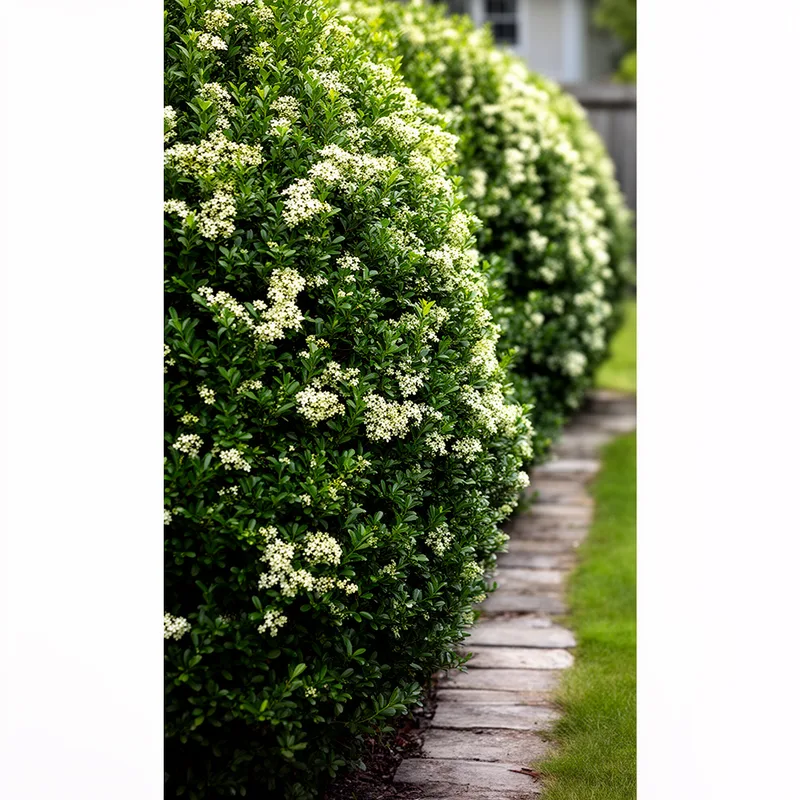
- A row of Japanese privet bushes lined the garden path, adding year-round greenery.
Examples
-
The Japanese privet is popular for use in hedges due to its dense foliage.
-
Unlike the Chinese variety, Japanese privet tends to stay more compact and manageable.
-
The Japanese privet thrives in well-drained soil.
-
Many gardeners prefer Japanese privets for their hardiness.
-
The Japanese privet is often used in gardens for its lush green leaves throughout the year.
-
Many homeowners choose Japanese privet for creating attractive and dense hedges.
-
In spring, the Japanese privet produces small white flowers that add beauty to any landscape.
Synonyms

An evergreen shrub with small dark leaves and loose white flowers often used for hedges
Surface Forms
Morphology
The phrase simply combines the adjective 'Japanese' (of or from Japan) with the noun 'privet' (a type of shrub), so its meaning as a privet associated with Japan is directly derivable from the constituents. Adjective + noun origin/type constructions are common cross-linguistically and follow standard composition patterns, so a B1 learner who knows both words will understand this MWE.
Etymology
Japanese privet comes from putting Japanese (the country where the plant comes from) together with privet (a common small shrub). So the name simply means 'an evergreen shrub from Japan' and gives an easy picture to remember the plant.

