
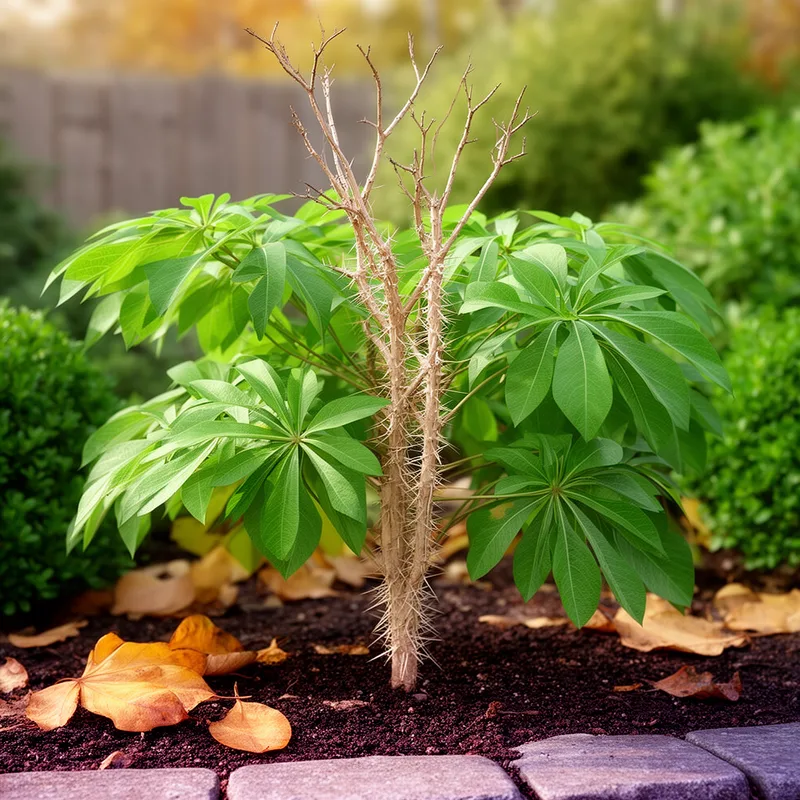
Japanese angelica tree
- noun
- The Japanese angelica tree is popular in gardens for its striking appearance and upright growth.
Examples
-
In the wild, the Japanese angelica tree can form dense thickets that crowd out native plants.
-
Gardeners often prune the Japanese angelica tree to maintain its shape and encourage new shoots.
-
The Japanese angelica tree is known for its striking appearance.
-
Many gardeners admire the Japanese angelica tree for its large leaves.
-
Gardeners often prune the Japanese angelica tree to maintain its shape and encourage new shoots.
-
The Japanese angelica tree is popular in gardens for its striking appearance and upright growth.
-
In the wild, the Japanese angelica tree can form dense thickets that crowd out native plants.
Synonyms
A small tree or large shrub from Asia that has groups of white flowers and attractive leaves
How Big


Surface Forms
Morphology
This is a transparent, compositional noun phrase: 'Japanese' indicates origin, 'angelica' names a plant, and 'tree' specifies it is a tree form, so a learner who knows the three words can infer it is a tree of the angelica plant from Japan. The adjective+noun+noun naming pattern for species is cross-linguistically common and follows ordinary semantic composition.
Etymology
Japanese angelica tree may come from where the plant grows and how it looks: Japanese because it comes from Japan, angelica because its large, umbrella-like flower clusters looked 'angelic' or like the herb called angelica, and tree because it grows like a small tree. That's why the name helps you remember it as a showy, tree-like plant often grown in gardens.