

Japanese Archipelago
- noun
- /ˌdʒæpəˈniːz ˌɑːrkɪˈpɛləɡoʊ/
- The Japanese Archipelago consists of four main islands.
Examples
-
Earthquakes are common throughout the Japanese Archipelago due to its location on tectonic plate boundaries.
-
The climate varies widely across the Japanese Archipelago, from subarctic in the north to subtropical in the south.
-
The Japanese Archipelago stretches over 1,300 miles, separating the Sea of Japan from the Pacific Ocean.
-
Did you know that the Japanese Archipelago has over 3,000 islands?
-
The Japanese Archipelago is made up of more than 6,800 islands, including Honshu, Hokkaido, Kyushu, and Shikoku.
-
Many tourists visit the Japanese Archipelago to experience its beautiful landscapes and unique culture.
-
The Japanese Archipelago extends from the Sea of Japan in the west to the Pacific Ocean in the east.
Synonyms

 725
1.0
725
1.0

A country in East Asia made of many islands known for its culture and technology
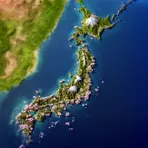
A group of more than 3,000 islands east of Asia that make up Japan
Surface Forms
Morphology
The meaning 'a group of islands forming Japan' is directly and transparently derived from combining 'Japanese' (of or relating to Japan) with 'archipelago' (a cluster of islands). This is a literal, compositional phrase found cross-linguistically, so a B1 learner who knows both constituents would readily infer the MWE meaning.
Etymology
The name Japanese Archipelago paints a picture of many islands like a string of beads on the sea: Japanese shows the country and archipelago means 'group of islands', so it refers to the chain of islands that make up Japan.