

Japan cedar
- noun
- Specialized
- The forest was filled with ancient Japan cedar trees towering above the walking path.
Examples
-
The temple was constructed using durable Japan cedar timber.
-
Many carpenters prefer using Japan cedar for furniture.
-
Lightweight furniture is often made from softwood like Japan cedar.
-
The Japan cedar is known for its beautiful grain.
-
Lightweight furniture is often made from softwood like Japan cedar.
-
The temple was constructed using durable Japan cedar timber.
-
Many carpenters prefer using Japan cedar for making high-quality furniture.
Synonyms
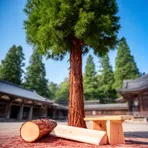
A tall evergreen tree from Japan and China with soft durable wood

A tall evergreen tree from Japan and China with soft wood

A tall evergreen tree from Japan and China with soft wood used for building

A large evergreen tree from Japan called Japanese cedar grown for its wood
Surface Forms
Morphology
The phrase simply combines a place name ('Japan') with a noun ('cedar') to denote a cedar tree associated with or originating from Japan, so the meaning is directly derivable from the constituents. Country/place + noun constructions are cross-linguistically common and follow a transparent compositional pattern that a B1 learner knowing both words would understand.
Etymology
The name Japan cedar comes from the tall evergreen trees that grow in Japan. People called them cedar because their wood and shape are like other 'cedar' trees, so the name simply means a cedar from Japan.

