
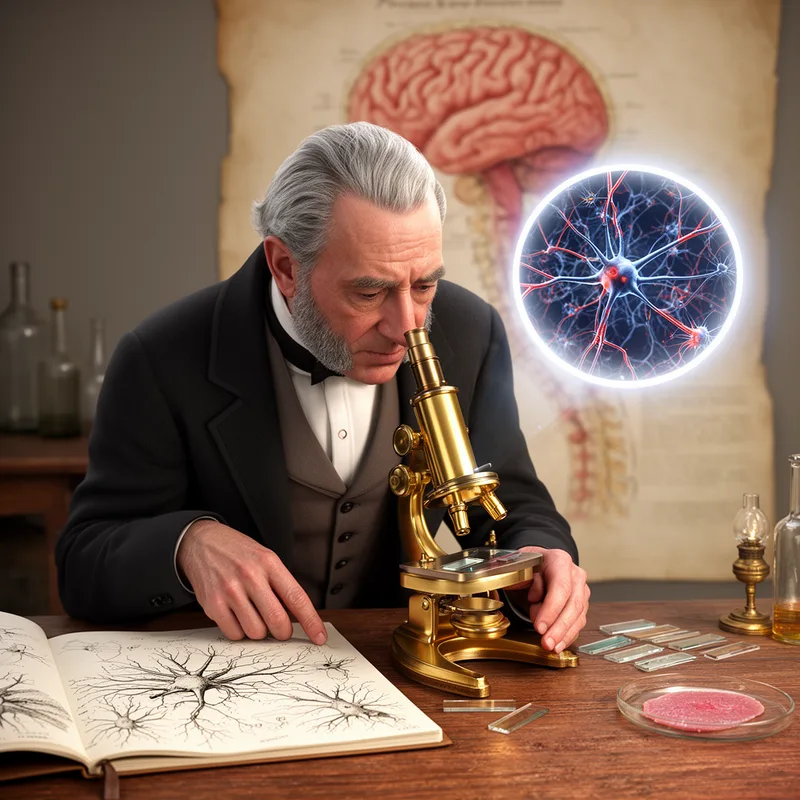
Jan Evangelista Purkinje
- proper noun
- Medical students learn about Jan Evangelista Purkinje when studying cellular structures in the brain.
Examples
-
The neuroscientist cited Jan Evangelista Purkinje for his pioneering work on brain cells.
-
Research on Jan Evangelista Purkinje's discoveries has advanced our understanding of the nervous system.
-
The scientist Jan Evangelista Purkinje made significant contributions to physiology.
-
Did Jan Evangelista Purkinje discover the Purkinje cells?
-
Medical students learn about Jan Evangelista Purkinje when studying cellular structures in the brain.
-
Research on Jan Evangelista Purkinje's discoveries has advanced our understanding of the nervous system.
-
The scientist Jan Evangelista Purkinje made significant contributions to physiology.
Surface Forms
Morphology
Jan + Evangelista + Purkinje
This is a proper name referring to a specific historical scientist; the information that he was a 19th‑century Bohemian physiologist cannot be derived from the constituent tokens. Even if a learner recognised 'Purkinje' as an eponym for anatomical structures, that form does not transparently convey the referent's identity or profession to a B1 learner, so the overall meaning is not predictable from the parts.
Etymology
Jan Evangelista Purkinje comes from a Czech doctor and scientist who looked through an early microscope and first described large nerve cells in the brain. Those cells were later called 'Purkinje cells' after him, so today his name is used when we talk about these brain parts.

