
James River
- proper noun
- /dʒeɪmz ˈrɪvər/
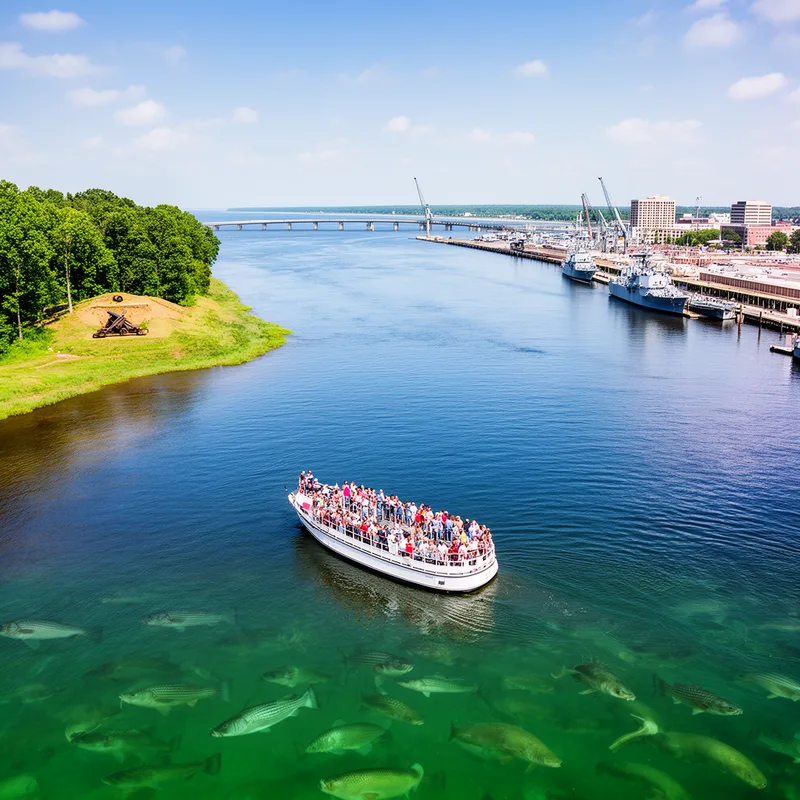
- During the second half of the 1800s and the first half of the 1900s, Virginia's James River (Fig. 88) produced more seed oysters than any estuary in the world.
- James River Bay
- James River, Va.
Examples
-
In 1988 and 1989, oysters were relatively scarce in the James River.
Academic text (1996) -
The James River is the southernmost of several rivers flowing into the west side of Chesapeake Bay.
Academic text (1996) -
The seed came mostly from Virginia's James River, or from Maryland beds in upper Chesapeake Bay.
Academic text (1996) -
In the 1980s and 1990s, Virginia oystering has been concentrated in the James River (Fig. 95).
Academic text (1996) -
The James River flows through Virginia, offering stunning views for visitors.
-
Many recreational activities, such as kayaking and fishing, are popular on the James River.
-
The James River is known for its rich history and natural beauty in eastern Virginia.
Surface Forms
Morphology
The compound is a straightforward place-name formed from a proper name + the noun 'river', so a learner who knows 'James' (as a name) and 'river' will immediately understand it denotes a river called James. The specific geographic details are not predictable from the words, but the core meaning (a river bearing the name James) is transparently derived from the constituents and is cross-linguistically common.
Etymology
James River (Virginia) was named by early English settlers for 'King James I' when they founded Jamestown. So the river's name remembers the king and that is why we still call it the James River today.

