
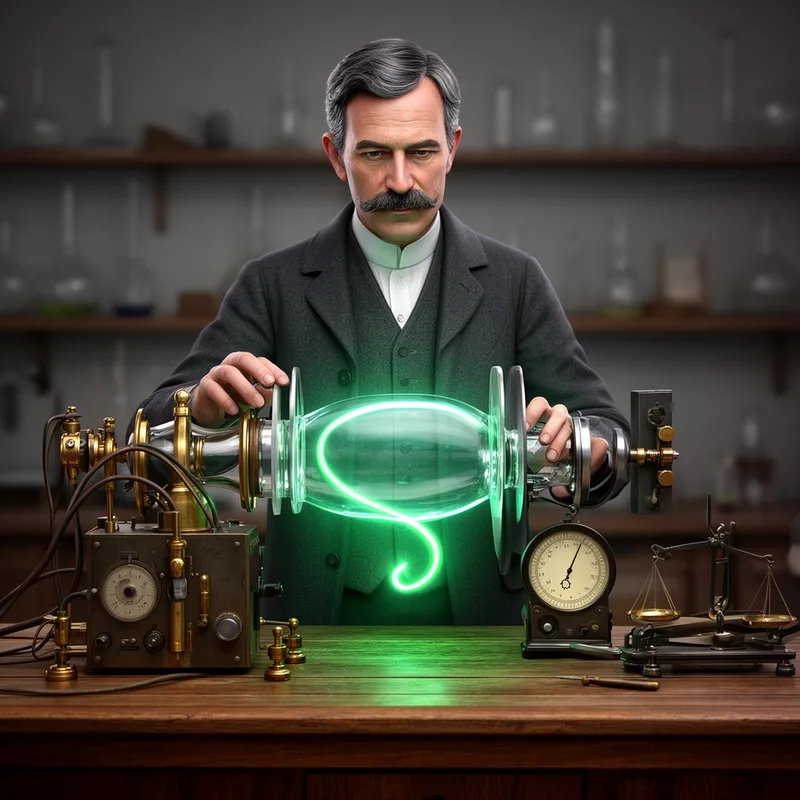
J. J. Thomson


 1
7.5
- proper noun
- The charge-to-mass ratio of the electron was first measured by J. J. Thomson.
Examples
-
J. J. Thomson revolutionized physics with his discovery of the electron in 1897.
-
Many students learn about J. J. Thomson's experiments in their introductory chemistry classes.
-
The scientist J. J. Thomson made groundbreaking discoveries in atomic physics.
-
Did J. J. Thomson really discover the electron?
-
J. J. Thomson revolutionized physics with his discovery of the electron in 1897.
-
Many students learn about J. J. Thomson's experiments in their introductory chemistry classes.
-
The charge-to-mass ratio of the electron was first measured by J. J. Thomson.
Synonyms
 1
8.4
English physicist who discovered the electron and measured its charge and mass
 1
7.5
An English scientist who discovered the electron and measured its charge and mass
Surface Forms
Morphology
J. + J. + Thomson
This item is a proper name made of initials and a surname; knowing the constituents 'J.' and 'Thomson' only signals a person's name but gives no information about the biographical fact that he discovered the electron. Proper names are referential and arbitrary across languages, so the specific meaning (the historical figure and his discovery) cannot be derived from the parts by a B1 learner.
Etymology
J. J. Thomson was an English scientist who, in 1897, found tiny negative particles called 'electrons' by sending electricity through a glass tube and watching how they moved. That's why he is known for measuring their 'charge and mass' and for showing that atoms have smaller parts.