
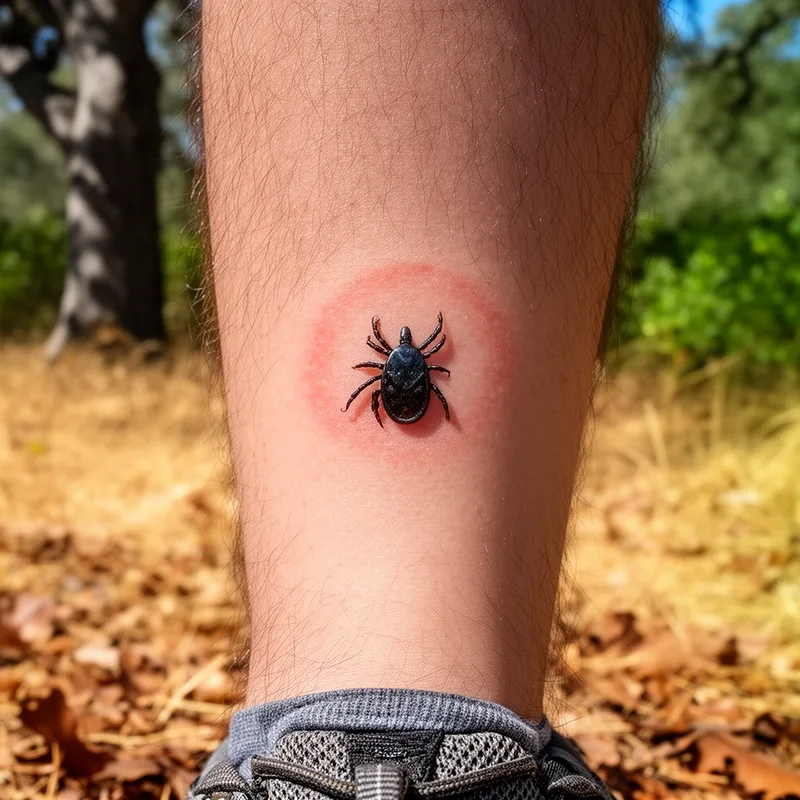
Ixodes pacificus
- noun
- /aɪˈkoʊdiːz pəˈsɪfɪkəs/
- Specialized
- The bite of Ixodes pacificus can transmit the bacterium responsible for Lyme disease.
Examples
-
Wildlife researchers study the life cycle of Ixodes pacificus to understand Lyme disease risks.
-
Ixodes pacificus is commonly found in areas with abundant oak and brush in northern California.
-
The Ixodes pacificus is commonly found in wooded areas.
-
Have you heard about Ixodes pacificus and its role in Lyme disease?
-
Ixodes pacificus is a major carrier of Lyme disease in northern California and thrives in wooded habitats.
-
People living in areas infested by Ixodes pacificus should take precautions to avoid tick bites.
-
Researchers identified Ixodes pacificus as an important vector for connecting wildlife and Lyme disease transmission.
Synonyms

A tick in the western United States that bites people and spreads Lyme disease
Surface Forms
Morphology
Ixodes + pacificus
The binomial combines a genus name ('Ixodes' = a group of ticks) with a Latin species epithet ('pacificus' suggesting an association with the Pacific), so a learner who knows both parts could infer it refers to a tick from the Pacific/western region. However, the full specific sense — its common name, precise geographic range, and role as a Lyme-disease vector — is not directly derivable from the parts, making the meaning only partially predictable.
Etymology
Ixodes pacificus is a name that points to a tick from the Pacific coast. The part Ixodes is the name for a group of 'ticks' and pacificus means 'from the Pacific', so the name identifies the western black-legged tick that often spreads Lyme disease in the western United States.

