
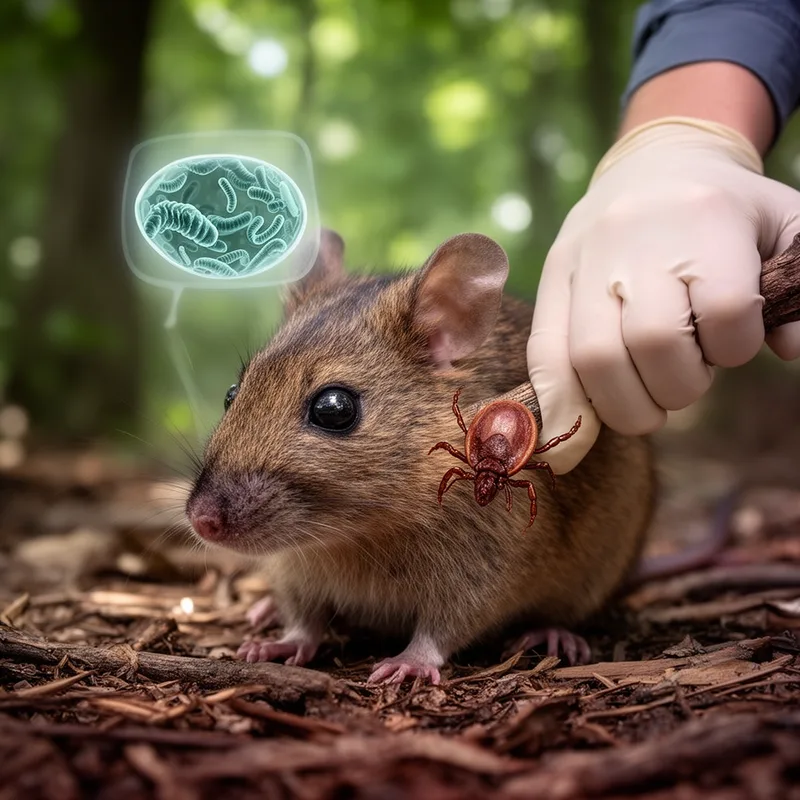
Ixodes neotomae
- noun
- Specialized
- The dusky-footed wood rat is often host to the tick Ixodes neotomae.
Examples
-
Researchers studied how Ixodes neotomae transmits Lyme disease bacteria to local rodent populations.
-
Unlike some other species, Ixodes neotomae rarely bites humans directly.
-
The Ixodes neotomae tick is often found in wooded areas.
-
Researchers study Ixodes neotomae for its role in disease transmission.
-
Researchers studied how Ixodes neotomae transmits Lyme disease bacteria to local rodent populations.
-
The dusky-footed wood rat is often host to the tick Ixodes neotomae.
-
Unlike some other species, Ixodes neotomae rarely bites humans directly.
Surface Forms
Morphology
Ixodes + neotomae
The form is a Latin binomial: 'Ixodes' names a genus of ticks, so a learner who recognises that convention could infer this refers to a type/species of tick. However 'neotomae' is not an English word and the specific biological/epidemiological sense (hosts, biting behaviour, disease transmission) cannot be derived from the parts, and many B1 learners will not know taxonomic naming conventions, so comprehension is only partial.
Etymology
Ixodes neotomae comes from its parts: Ixodes is the tick group name and neotomae was taken from the wood rat name Neotoma. Scientists named this tick after the dusky-footed wood rat because the tick lives on and spreads disease in that animal, so the name helps you remember it mainly affects wood rats and rarely 'bites' people.

