
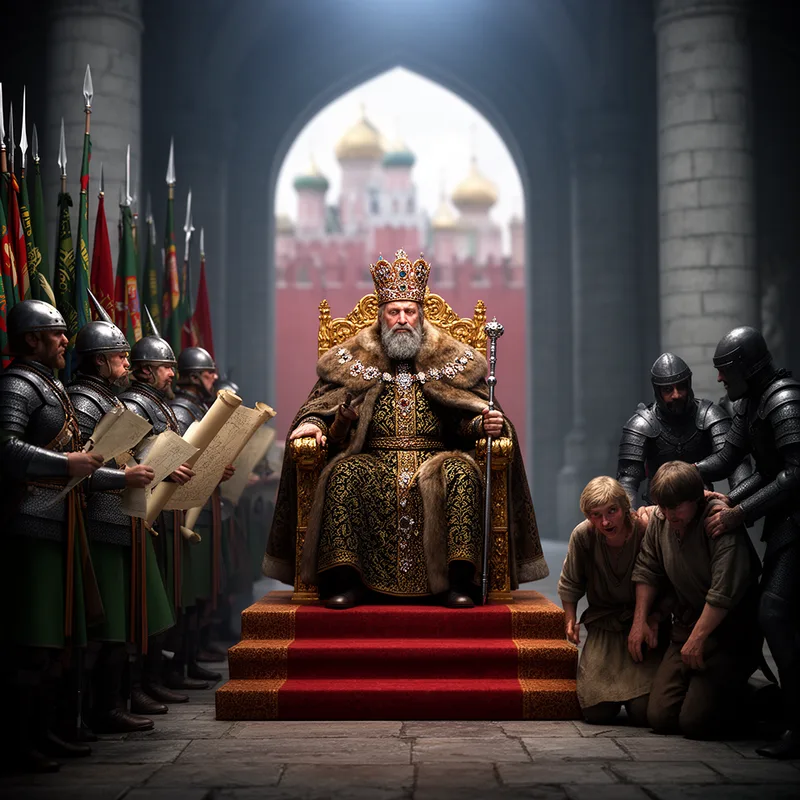
Ivan the Terrible
 6
8.4

- proper noun
- /ˈaɪvən ðə ˈtɛrəbəl/
- The reign of Ivan the Terrible was filled with controversy.
Examples
-
Many Russian legends and stories are associated with Ivan the Terrible.
-
Historians still debate whether Ivan the Terrible was a visionary ruler or a ruthless tyrant.
-
The reign of Ivan the Terrible drastically changed the politics of Russia.
-
Many historians study Ivan the Terrible to understand Russian history.
-
During his reign, Ivan the Terrible centralized power and instilled fear across Russia.
-
Many historians discuss the brutal policies of Ivan the Terrible, emphasizing his cruelty towards rivals.
-
The legacy of Ivan the Terrible is often marked by his notorious acts and violent rule in 16th-century Russia.
Synonyms

 1
9.1
A Russian ruler of the 1500s who was the first to be called tsar and acted cruelly
The first ruler of Russia to take the title czar, ruling from 1547 to 1584
Surface Forms
Morphology
Ivan + the + terrible
The epithet is compositionally clear: a B1 learner who knows 'Ivan' (a personal name), 'the', and 'terrible' will understand this refers to a person named Ivan described as terrible or cruel. However, the specific historical identity and facts (that he was the first czar of Russia and the exact nature of his reign) cannot be derived from the words alone, so the expression is only partially transparent.
Etymology
Ivan the Terrible comes from the old Russian word 'Grozny', which meant 'powerful and frightening'. Because Ivan used violent, cruel methods while he ruled, English speakers used this translated nickname, so today the name suggests a cruel, powerful ruler.