
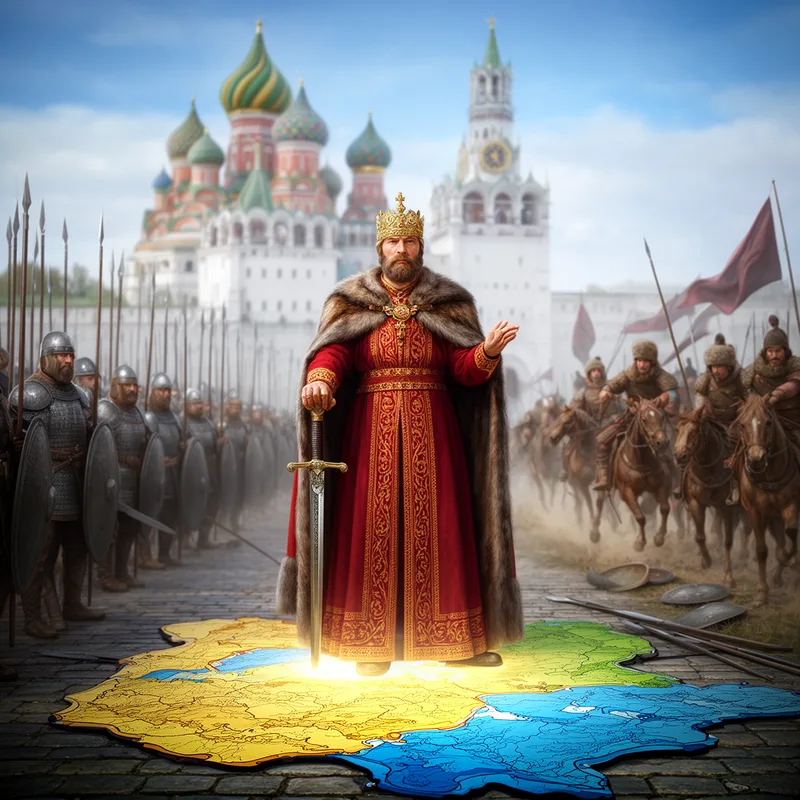
Ivan the Great


 1
7.2
- proper noun
- Historians credit Ivan the Great with laying the foundations for a centralized Russian government.
Examples
-
Under Ivan the Great, Moscow finally broke free from Tartar domination.
-
The rule of Ivan the Great marked the beginning of Russia's emergence as a powerful state.
-
The legacy of Ivan the Great is still felt in modern Russia.
-
Did Ivan the Great really unify Russia during his reign?
-
Historians credit Ivan the Great with laying the foundations for a centralized Russian government.
-
The rule of Ivan the Great marked the beginning of Russia's emergence as a powerful state.
-
Under Ivan the Great, Moscow finally broke free from Tartar domination.
Synonyms
 1
9.1
A ruler of Muscovy who ended Mongol rule and united Russian lands
A ruler of the lands around Moscow who united Russian areas and ended Mongol control
Surface Forms
Morphology
Ivan + the + great
The epithet 'the Great' attached to a personal name transparently signals a distinguished or historically important person, so a B1 learner who knows the words would understand this refers to a famous/important Ivan. This naming pattern (e.g. 'Alexander the Great') is cross-linguistically common, though learners would not infer specific historical details like dates or titles from the constituents alone.
Etymology
Ivan the Great earned his name because he made Moscow much stronger by beating the Tatars in war and bringing many lands under one ruler. So calling him the Great reminds us he helped 'unite' Russia and build a stronger country.