

Israel
 92
5.6
92
5.6

- proper noun
- /ˈɪzreɪəl/
- Nebuchadnezzar later took Israel into captivity and imposed his own form of law and order.
- ancient Israel
- History of ancient Israel
- people of Israel
Loading YouTube…
Watch on YouTubeBecause Deuteronomy sets up Israel as the head of the nations, right?
- Because Deuteronomy sets up Israel as the head of the nations, right?
- So Solomon builds a physical temple in Israel.
- It's not that kind of relationship. It's characterized in the Old Testament as a struggle. So Israel means those who struggle with God,
- If you want a new Jerusalem, a Puritan Israel, they use that those terms frequently.
Examples
-
The Philistines sent their armies, but the tribes of Israel had awakened.
-
Thus sayeth the Lord God of Israel, "Let my people go!"
-
Did some Jews imagine the Land of Israel as an abandoned land?
Academic text (2008) -
"And unto all the children of Israel."
-
For the Lord has delivered Israel and returned the people to mastery in their own land.
Academic text (1999) -
Before the Gulf crisis, Turkey was improving its relations with Israel in trade and intelligence.
Academic text (1992) -
The Angel then relates that Israel has already not been obedient.
-
By a prophet, Yahweh brought Israel up from Egypt.
-
On the first day, the children of Israel stamped around Jericho with gusto.
Fiction book (1997) -
The ancient kingdom of Israel was known for its significant role in biblical history.
Compounds

 3
6.8
3
6.8
Twelve ancient family groups in Israel, each descended from one of Jacob's sons
 2
3.4
2
3.4
The city Jerusalem that Israel says is its capital, though many countries do not recognize this


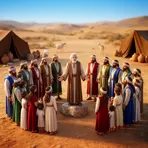
Twelve family groups in ancient Israel that each come from one of Jacob's sons
Surface Forms
Etymology
Israel comes from the Hebrew name Yisra'el, which is usually understood as 'he who struggles with God' from the story of Jacob wrestling with an angel. That is why the ancient kingdom and its people were called Israel.