
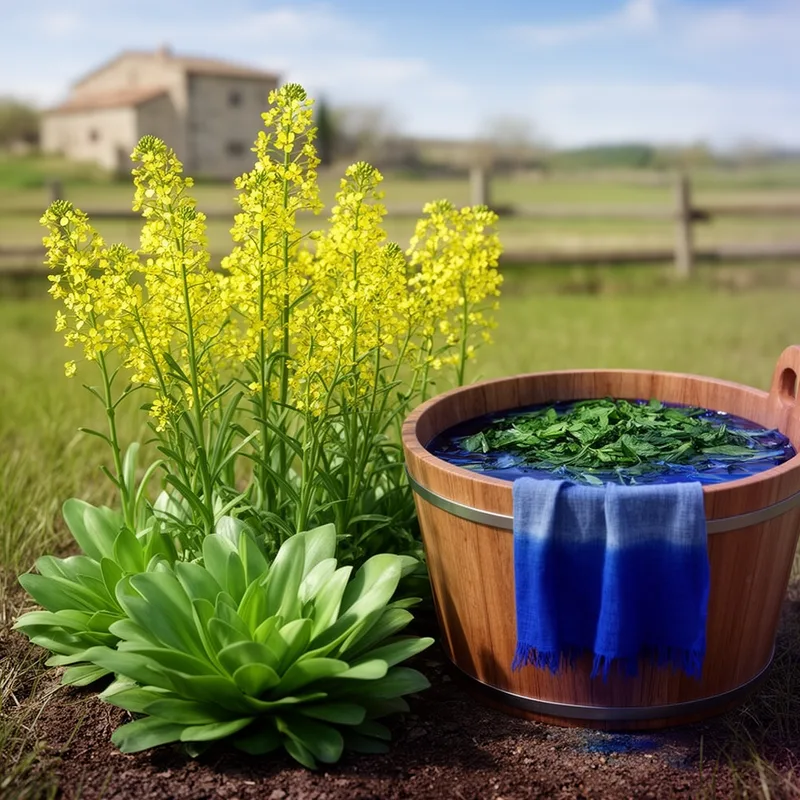
Isatis tinctoria
- noun
- Specialized
- The leaves of Isatis tinctoria were once an important source of blue dye in medieval Europe.
Examples
-
The leaves of Isatis tinctoria are used to produce a natural blue dye.
-
Farmers no longer cultivate Isatis tinctoria for dye, but it remains of interest to historians.
-
Botanists studied the characteristics of Isatis tinctoria to understand its natural pigment production.
-
Have you ever seen Isatis tinctoria growing in the wild?
-
The leaves of Isatis tinctoria were once an important source of blue dye in medieval Europe.
-
The leaves of Isatis tinctoria are used to produce a natural blue dye.
-
Farmers no longer cultivate Isatis tinctoria for dye, but it remains of interest to historians.
Synonyms

A European plant grown for blue dye from its leaves
A yellow-flowered plant once grown for a blue dye
Surface Forms
Morphology
Isatis + tinctoria
This is a scientific binomial composed of a genus name ('Isatis') and a species epithet ('tinctoria') whose element 'tinct-' relates to dyeing; together they denote the dye-producing plant (woad). If a learner knows the constituent elements (and their dye-related senses), the overall meaning is directly compositional and predictable rather than idiomatic.
Etymology
Isatis tinctoria takes its name from the word tinctoria, which comes from Latin and is linked to 'dyeing'. People once used the plant's leaves to make a strong blue dye called 'woad', so the name shows it was a plant used for making dye.

