

India rubber


 1
5.0
1
5.0
- noun
- /ˈɪndiə ˈrʌbər/
- Archaic
- The eraser on the end of this old pencil is made of India rubber.
Examples
-
In the 19th century, India rubber was commonly used to make waterproof coats and shoes.
-
Bouncing balls were once made entirely from India rubber extracted from South American trees.
-
The tire is made of India rubber.
-
Many erasers are made from India rubber.
-
The erasers were made of India rubber, allowing them to easily remove pencil marks.
-
The tires on the bicycle were crafted from India rubber to ensure durability and grip.
-
His waterproof jacket featured India rubber to keep him dry during the heavy rain.
Synonyms
 230
1.0
230
1.0
A strong elastic material from plant sap or made in factories used for things like tires
 1
2.9
1
2.9
An elastic material made from the sticky sap of certain trees used for many products

A natural stretchy material from tree sap used to make rubber things like tires or tubing
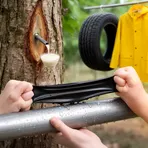
A natural elastic material made from rubber-tree sap used to make tires and waterproof clothes
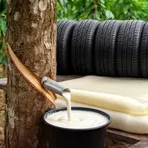
A natural rubber made from sap of the Brazilian rubber tree used to make tires
Surface Forms
Morphology
The meaning is directly compositional: 'India' (a place/origin) + 'rubber' (an elastic material) yields 'rubber from India' or a type of natural rubber. This origin-based noun-noun formation is cross-linguistically common and follows a standard pattern, so a B1 learner who knows both words can infer the MWE's meaning.
Etymology
India rubber may come from two simple ideas: the material was called rubber because people used it to 'rub out' pencil marks, and it was linked to India because Europeans first saw it arriving from the distant 'Indies'. That's why India rubber now means the stretchy material used for things like erasers and coats.