
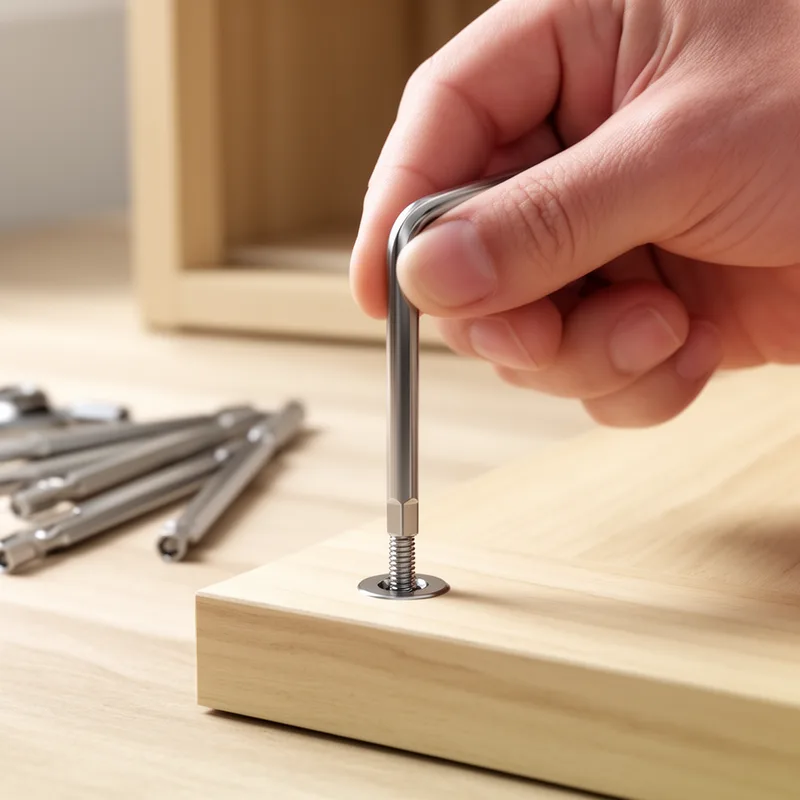
Inbus key
- noun
- /ˈɪnbəs ki/
- Specialized
- He accidentally stripped the bolt by using the wrong size Inbus key.
Examples
-
I searched my toolbox for an Inbus key to assemble the furniture.
-
The instruction manual suggests using an Inbus key to tighten the screws.
-
I need an Inbus key to fix this furniture.
-
The Inbus key is essential for tightening the screws.
-
I searched my toolbox for an Inbus key to assemble the furniture.
-
The instruction manual suggests using an Inbus key to tighten the screws.
-
He accidentally stripped the bolt by using the wrong size Inbus key.
Synonyms

 2
4.1
2
4.1

A small L-shaped tool with a six-sided end used to turn bolts with six-sided holes


 1
4.2
1
4.2
A small L-shaped tool used to turn screws with a six-sided hole

A small metal tool with a six-sided bar for turning screws with matching holes

A small L-shaped metal tool used to turn bolts and screws with six-sided holes

A small metal tool with a six-sided tip that turns screws with a six-sided hole in the head
A tool like an Allen key for turning bolts and screws with six-sided sockets
Surface Forms
Morphology
Inbus + key
The element 'Inbus' is a technical/brand-specific term (not a productive English morpheme) and provides no transparent semantic cue that would let a learner infer 'hexagonal wrench' from 'Inbus' + 'key'. While 'key' signals a tool, the specific shape/function (Allen/hex key) is lexicalized and language-specific, so a B1 learner who only knows the surface words would not reliably derive the intended meaning.
Etymology
The noun Inbus key probably comes from the German word Innensechskant, which means 'inside six-sided', or from a company that used the short name 'INBUS'. An Inbus key is a small L-shaped tool with a six-sided end that fits inside matching screws, so the name points to the tool's shape and use.