
Iguanodontidae
- noun
- /ˌɪɡwɑːnəˈdɒntɪdeɪ/
- Specialized
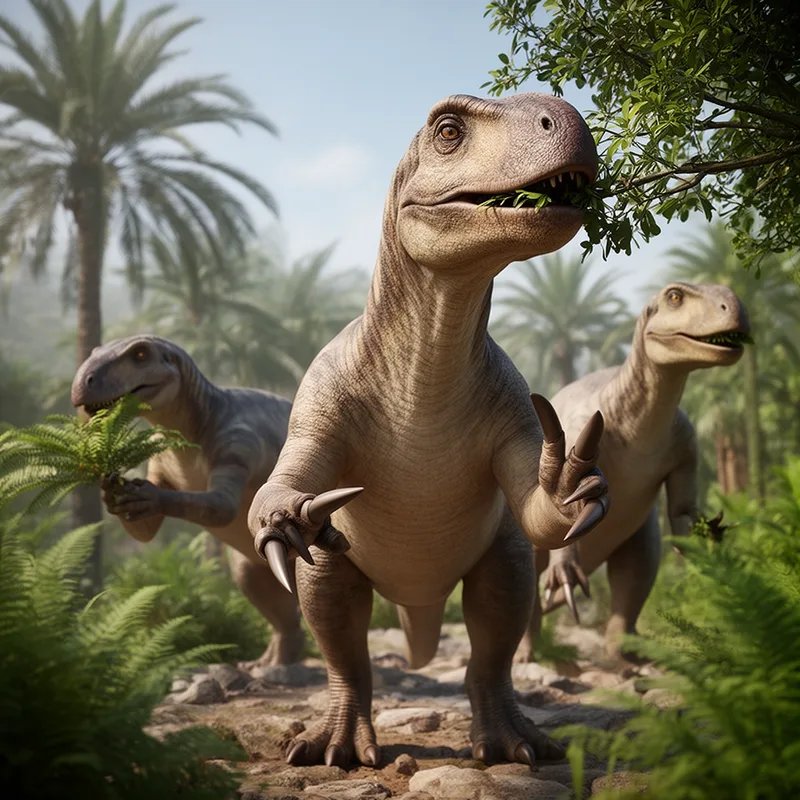
- The distinctive thumb spikes of Iguanodontidae may have been used for defense or foraging.
Examples
-
The Iguanodontidae family includes some of the largest herbivorous dinosaurs.
-
Fossils of Iguanodontidae have been discovered on several continents, indicating their wide distribution.
-
Paleontologists still debate the diversity within the family Iguanodontidae and its evolutionary relationships.
-
Did you know that Iguanodontidae lived during the Late Jurassic?
-
Fossils of Iguanodontidae have been discovered on several continents, indicating their wide distribution.
-
Paleontologists still debate the diversity within the family Iguanodontidae and its evolutionary relationships.
-
The distinctive thumb spikes of Iguanodontidae may have been used for defense or foraging.
Surface Forms
Morphology
Iguanodontidae = Iguanodon (semi-transparent) = Iguanodon + idae
The relation to the genus 'Iguanodon' is clear, but the suffix '-idae' is a technical zoological family ending that many learners will not know.
Etymology
Iguanodontidae comes from Iguanodon, which means 'iguana tooth' because its teeth looked like those of an iguana, and the ending -idae marks a 'family' in biology. So Iguanodontidae is the family name for those big plant-eating dinosaurs with beaks and thumb spikes.

