
I/O device
- noun
- /ˈaɪ oʊ dɪˌvaɪs/
- Specialized
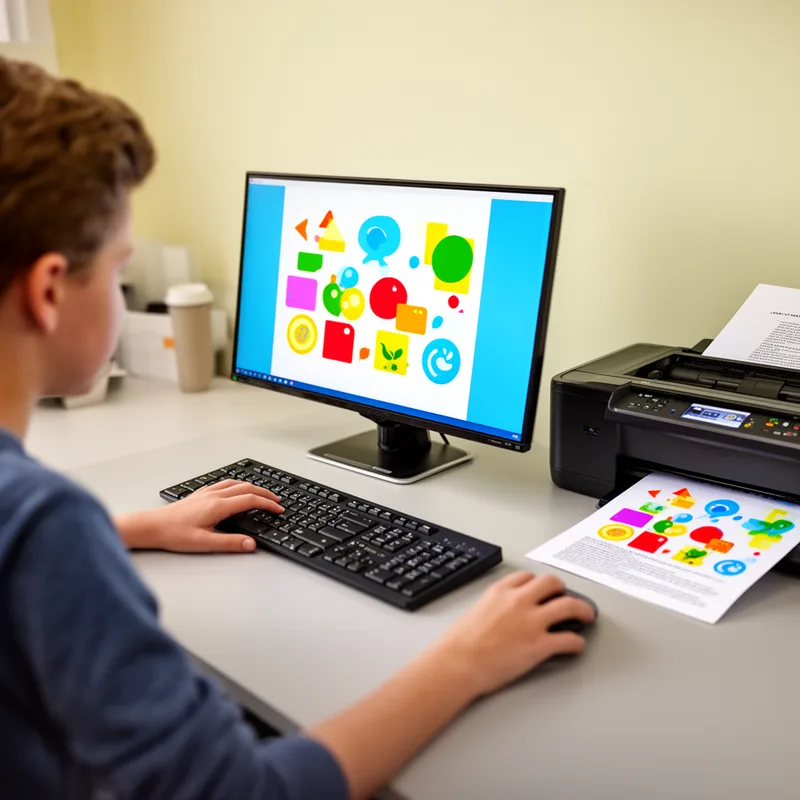
- A printer is a common type of I/O device that outputs documents from a computer.
- logical I/O device
- physical I/O device
Examples
-
A virtual machine (VM) is a software abstraction that behaves as a complete hardware computer, including virtualized CPUs, RAM, and I/O devices.
Academic text (2012) -
The ability to multiplex logical I/O devices onto physical ones allows both administrators and automated systems to drive I/O devices at higher utilization and achieve better hardware efficiency.
Academic text (2012) -
Several recent optimizations have tried exactly this using either software or modifications to the I/O device hardware.
Academic text (2012) -
The external interrupt structure provides a mechanism for some external event, such as an I/O device requiring service, to break the normal flow of instructions.
Academic text (1994) -
As a concrete example, consider a legacy PC I/O device such as an IDE disk.
Academic text (2012) -
The memory interface is a high-speed, synchronous, split address/data bus that allows the processor, as well as I/O devices, to access main memory.
Academic text (1994) -
The same VM image can be run on computers with different I/O devices and configurations, with the I/O virtualization layer providing the necessary conversion.
Academic text (2012) -
I/O virtualization provides a foothold for many innovative and beneficial enhancements of the logical I/O devices.
Academic text (2012) -
The ability to multiplex logical I/O devices onto physical ones allows both administrators and automated systems to drive I/O devices at higher utilization and achieve better hardware efficiency.
Academic text (2012) -
The POWER2 I/O system overcomes many of the POWER bottlenecks in moving data between main memory and I/O devices, such as disk controllers and LAN adapters.
Academic text (1994)
Synonyms

 ∞
2.1
∞
2.1

A machine or tool made to do a particular job
 2
5.5
2
5.5
A device like a keyboard or printer that connects to a computer


 1
4.7
1
4.7
An electronic machine like a printer that connects to a computer to let you enter, see or save information

A device that takes information into a computer and sends information out, like a printer or touchscreen
How Complex
1
3.8

- Specialized
80
1.0
203
1.1
146
1.8
730
1.0
Surface Forms
Morphology
I/O + device
The meaning is compositionally derived from 'I/O' (input/output) + 'device' (a manufactured item), so a learner who knows the abbreviation 'I/O' (or the words 'input' and 'output') can immediately infer 'a device for inputting or outputting data.' Note: 'I/O' is a technical abbreviation that many B1 learners may not know, but conditional on knowing that constituent the phrase is fully transparent.
Etymology
The name I/O device comes from the two jobs these parts do: input and output, which mean 'sending data into' and 'sending data out' of a computer. Think of it like a door that lets information go in or out, so the term means any piece of equipment that helps a computer receive or send data.