
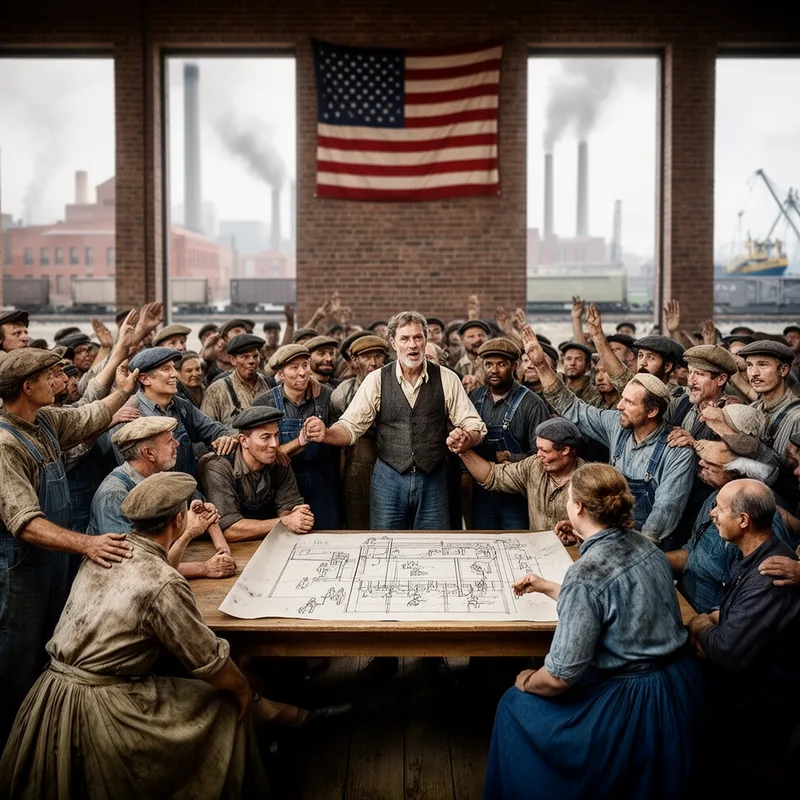
I.W.W.
- proper noun
- /aɪ dʌbəlju dʌbəlju/
- The I.W.W. played a significant role in organizing American industrial workers in the early 20th century.
Examples
-
Members of the I.W.W. advocated for direct action and the rights of all laborers, regardless of skill.
-
The decline of the I.W.W. began after World War I due to suppression and internal divisions.
-
The I.W.W. played a significant role in labor rights.
-
Many workers joined the I.W.W. during the early 20th century.
-
Members of the I.W.W. advocated for the rights of all laborers, regardless of their skills or backgrounds.
-
The I.W.W. played a crucial role in the labor movements of the early 1900s in the United States.
-
During its peak, many workers joined the I.W.W. to fight for better working conditions and fair wages.
Synonyms
A labor union from many countries that fights for workers' rights and the end of capitalism
Surface Forms
Etymology
I.W.W. is the short form of Industrial Workers of the World, which literally means 'workers of the world' and was a union that wanted big changes for working people. That's why the name shows its aim: to unite all workers, especially in industry, across countries.

