
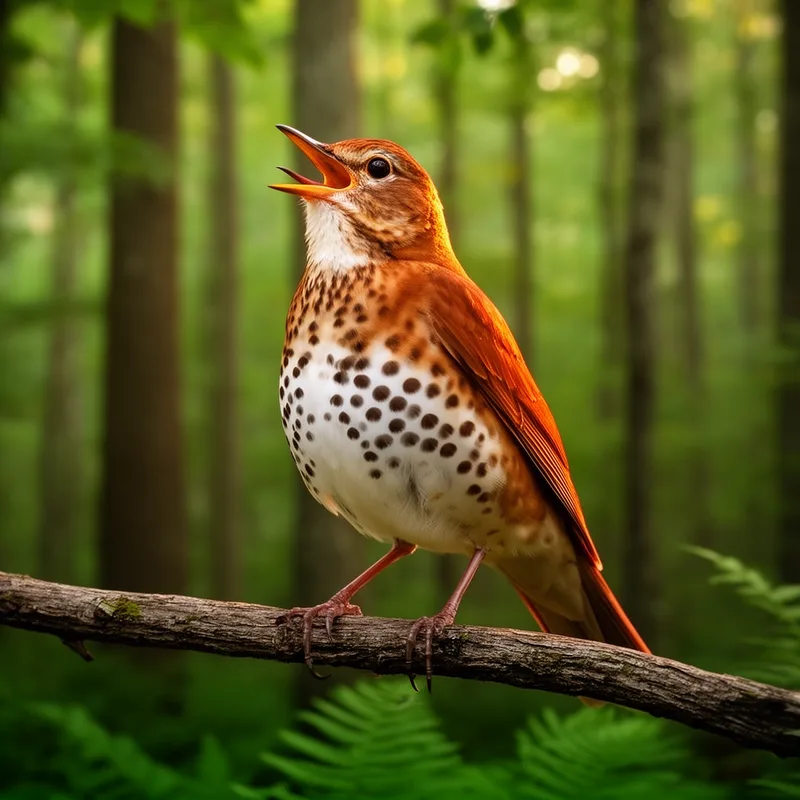
Hylocichla mustelina
- noun
- Specialized
- One of the best bird songs in North America is attributed to Hylocichla mustelina.
Examples
-
The Hylocichla mustelina is experiencing population decline due to habitat loss.
-
Birdwatchers delight in hearing the Hylocichla mustelina during early morning walks in the forest.
-
The Hylocichla mustelina is known for its beautiful song.
-
Have you ever seen a Hylocichla mustelina in the wild?
-
Birdwatchers delight in hearing the Hylocichla mustelina during early morning walks in the forest.
-
One of the best bird songs in North America is attributed to Hylocichla mustelina.
-
The Hylocichla mustelina is experiencing population decline due to habitat loss.
Synonyms


 1
8.1
1
8.1
A large North American bird that sings beautifully in eastern woods
A North American bird with a clear, flute-like song that lives in forests
A brown songbird from North America with a clear flute-like song
Surface Forms
Morphology
Hylocichla + mustelina
This is a Latin binomial (taxonomic name) rather than a compositional English phrase; the overall meaning is a scientific label for a particular thrush species. Even if a learner knows that Hylocichla is a bird genus, the species epithet 'mustelina' is opaque or unknown and the name functions as an arbitrary label, so a B1 learner cannot derive the common‑language meaning from the constituents.
Etymology
Hylocichla mustelina may come from old words meaning 'wood' and 'weasel-like'. The first part, Hylocichla, points to a 'thrush of the woods' and the second part, mustelina, refers to a 'weasel' because of the bird's brown, spotted back, so the full name helps you remember a brown forest thrush with a sweet song.