
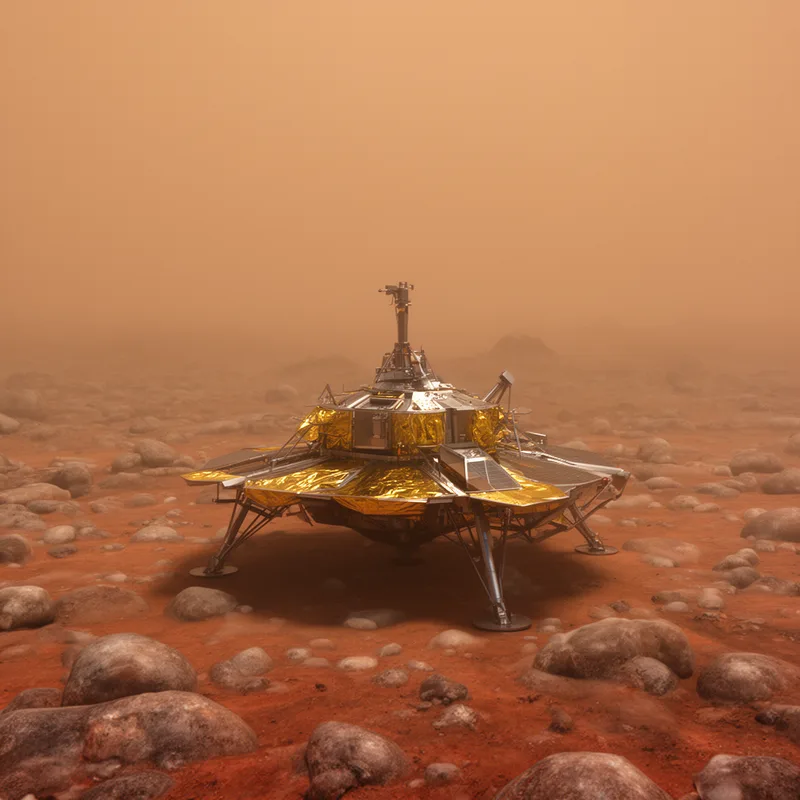
Huygens
 9
9.6

- proper noun
- The probe itself was christened Huygens, after the seventeenth-century Dutch astronomer.
- Huygens probe
- Huygens mission
- Cassini/Huygens
Examples
-
In January, the Huygens probe landed on Titan and discovered that liquid methane flows across the frigid surface.
Academic text (2005) -
Huygens will reach Titan on January 14, parachuting through the dense atmosphere for nearly three hours.
Academic text (2004) -
Since 1988, I have been one of the principal investigators involved with the Huygens project.
Academic text (2004) -
In December, it will eject the Huygens probe developed by the European Space Agency.
Academic text (2004) -
Of course, the Huygens mission will not be the end of the exploration of Titan.
Academic text (2004) -
Cassini and Huygens have been locked together since the mission was launched in October 1997.
Academic text (2004) -
Initially, Huygens will be slowed by friction between its front shield and the atmosphere.
Academic text (2004) -
The parachutes should ultimately slow the probe to about eleven miles an hour, slow enough for Huygens to examine the moon's atmosphere and surface, and then survive impact and continue to communicate with Cassini once it lands.
Academic text (2004) -
Although this mission should provide valuable evidence regarding whether or not there is liquid on Titan's crust, it is unlikely the Huygens lander will observe any evidence of biological activity on Titan.
Academic text (2000) -
The time has come to witness Huygens' historic descent to Titan's surface.
Surface Forms
Etymology
Huygens was the name given to the space probe in honour of Christiaan Huygens, the Dutch scientist. The surname Huygens comes from the old given name Huygen, a form of Hugo that means 'mind' or 'spirit', so the probe carries the scientist's family name as a tribute to his work.