

Huygens' principle of superposition
- noun
- /ˈhaɪɡənz ˈprɪnsəpəl əv ˌsuːpərpəˈzɪʃən/
- Specialized
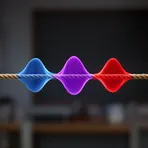
- According to the Huygens' principle of superposition, the total displacement at any point is the sum of the displacements caused by each wave.
Examples
-
The Huygens' principle of superposition is essential for understanding how multiple waves combine to produce complex interference patterns.
-
Engineers rely on the Huygens' principle of superposition to model the behavior of light and sound waves.
-
The Huygens' principle of superposition is fundamental for analyzing complex wave patterns in physics.
-
According to Huygens' principle of superposition, waves can interfere with each other.
-
Have you ever studied Huygens' principle of superposition in physics class?
-
According to the Huygens' principle of superposition, the total displacement at any point is the sum of the displacements caused by each wave.
-
Engineers rely on the Huygens' principle of superposition to model the behavior of light and sound waves.
Synonyms
 4
8.6
4
8.6

A case where different waves or forces act together and produce one result

A law that when waves overlap their effects add up at each point
Surface Forms
Morphology
Huygens' + principle + of + superposition
The phrase is compositional: 'principle' (a rule) combined with 'of superposition' (about the superposition concept), and 'Huygens'' is simply an attributive proper name. A B1 learner who knows the constituent meanings can infer this refers to a rule concerning superposition, even if they lack specialized knowledge of the detailed wave mechanics.
Etymology
Huygens' principle of superposition gives a simple picture: Huygens' principle says every point on a wave sends out tiny ripples called 'wavelets', and superposition means these ripples meet and add together. That's why it means 'the whole wave at a point is the sum of the small waves'.