
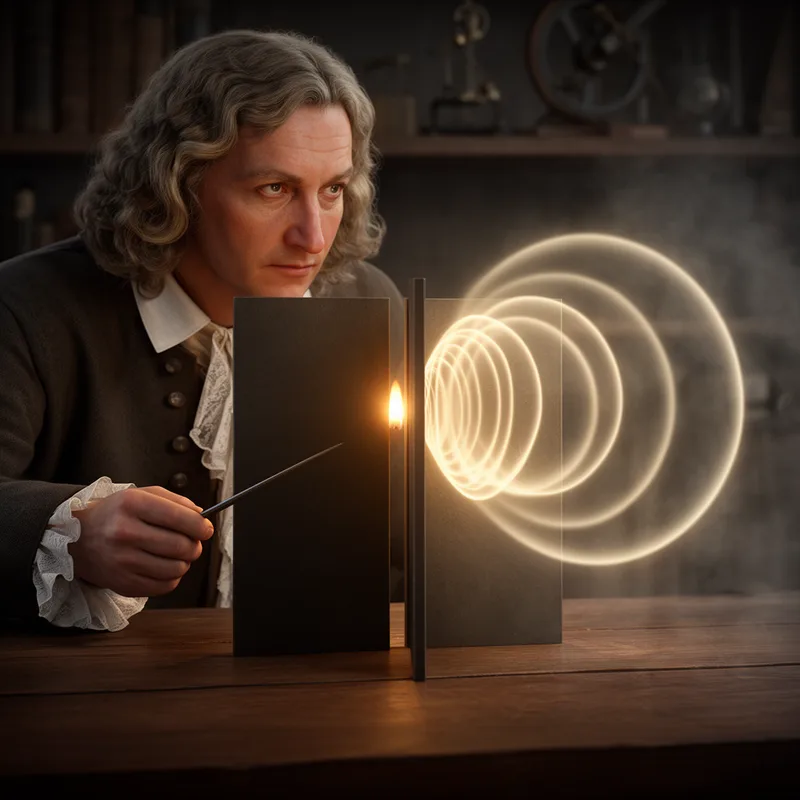
Huygenian


 1
9.9
- adjective
- /ˌhaɪˈɡeɪniən/
- Specialized
- The Huygenian explanation of light as a wave was revolutionary in the 17th century.
Examples
-
The debate between Huygenian and Newtonian theories shaped the history of physics.
-
Many modern optics concepts are based on Huygenian principles.
-
The Huygenian model of light propagation is widely accepted in physics.
-
Many physicists study Huygenian principles to understand wave behavior.
-
The Huygenian theory of light describes how waves propagate through different media.
-
In physics classes, students learn about the Huygenian concepts of wave interference and diffraction.
-
The Huygenian perspective on optics has influenced many scientific advancements over the centuries.
Surface Forms
Morphology
Etymology
Huygenian comes from the name Huygens, a scientist in the 1600s who explained light as 'waves'. So Huygenian describes theories or principles that come from his work in physics, much like 'Newtonian' names ideas from Newton.