
Hurrian


 1
9.9
- adjective
- /ˈhʊr.i.ən/
- It is a song from the Hurrian people who lived in the ancient city of Ugarit on the coast of Syria in the Middle East.
Examples
-
He notes that the style of Hurrian personal names resembles that of the Akkadians.
Academic text (2008) -
Hence, the noted stylistic similarities between the beakers and the Nuzi material are probably best explained in terms of widespread cultural interaction in the second millennium and, particularly, by the wide sphere of Hurrian influence across Greater Mesopotamia in this period.
Academic text (1991) -
By 1200, however, the Hittites had crushed the Mitannis, ending Hurrian independence.
Academic text (2008) -
But archaeological data is sparse; though a few other sites with Hurrian occupation have been excavated, all of them date to a later period than Urkesh.
Academic text (2008) -
Even then, Urkesh and Hurrian traditions continued to influence the Hittites in Anatolia, just as Greek culture continued to influence Rome after it was conquered.
Academic text (2008) -
But thanks to the sculptors, stone masons, and seal carvers at Urkesh, Hurrian creativity can shine once again.
Academic text (2008) -
The Hurrian language provides valuable insights into the ancient cultures of the Near East.
-
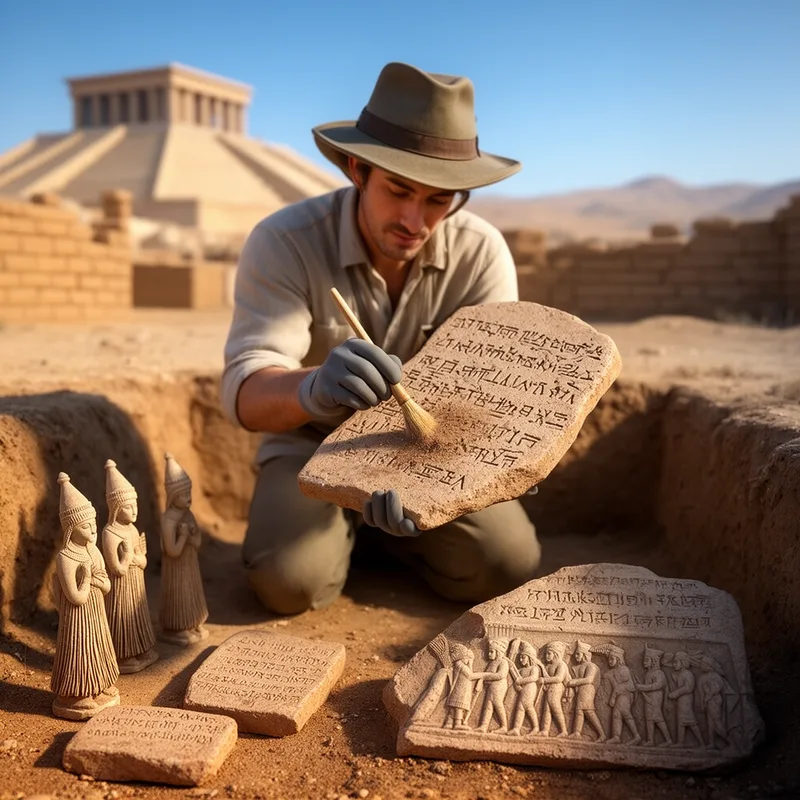
Many artifacts have been discovered that display unique Hurrian artistic styles.
-
Historians study Hurrian texts to better understand the social structure of this ancient civilization.
Surface Forms
Etymology
Hurrian comes from the name of an ancient people, the Hurri, who lived in the Near East, so the word means 'relating to their people, language, or culture'.