
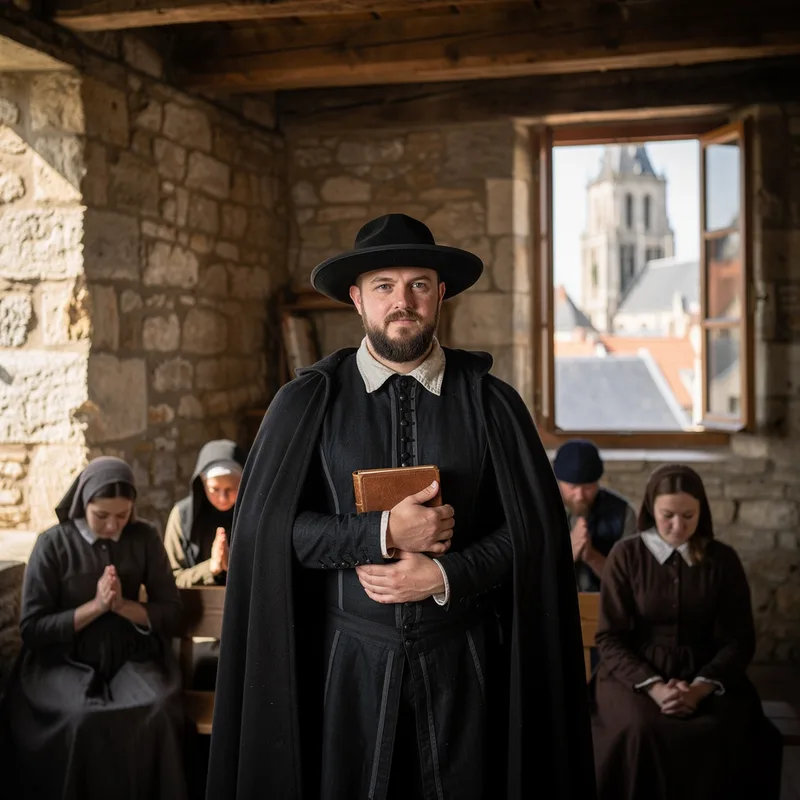
Huguenot
 2
9.9

- noun
- /ˈhjuːɡəˌnoʊ/
- The problems of conversos in sixteenth-century Spain were nothing compared to the persecution of Huguenots in France.
- French Huguenots
- refugee Huguenots
- Huguenots in France
Loading YouTube…
Watch on YouTubeIt's changed to Burden by Calvin Burden, who has a Huguenot Protestant wife and friends.
- It's changed to Burden by Calvin Burden, who has a Huguenot Protestant wife and friends.
Examples
-
The St. Bartholomew's Day massacre in 1572 was a targeted group of assassinations and a wave of Catholic mob violence, directed against the Huguenots during the French Wars of Religion.
-
The great Protestant leader, the Admiral Coligny, head of the Huguenot party.
-
Several Huguenots opted out of the congregation and formed a popular religious movement.
Academic text (2006) -
The first Comte de Reynaud expelled all the radical Huguenots from this village.
-
King Henry IV of France, who practiced Calvinism, became the token leader of the Huguenots in 1568.
Blog text (26) -
During the 16th century, many Huguenots fled France to escape religious persecution.
-
The Huguenots played a significant role in the religious conflicts in France during the Reformation.
-
As a proud Huguenot, she often spoke about her ancestors' struggles for religious freedom.
Synonyms
 6
7.5
A person who follows the religious teachings of John Calvin
Surface Forms
Etymology
Huguenot may come from the name Hugues or from a word used for Swiss allies that meant 'oath-fellow'. Either way, the name came to mean a French Protestant who belonged to a united group of believers in the 16th and 17th centuries.