

Hottonia palustris
- noun
- UK
- The shallow pond was covered with blooming Hottonia palustris in early spring.
Examples
-
Many gardeners appreciate Hottonia palustris for its delicate, fern-like leaves and attractive flowers.
-
Ecologists study populations of Hottonia palustris in wetland restoration projects.
-
The Hottonia palustris thrives in shallow waters.
-
Have you seen the Hottonia palustris in bloom?
-
Many gardeners appreciate Hottonia palustris for its delicate, fern-like leaves and attractive flowers.
-
The shallow pond was covered with blooming Hottonia palustris in early spring.
-
Ecologists study populations of Hottonia palustris in wetland restoration projects.
Synonyms
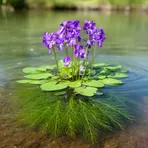
A plant that grows in shallow water with leaves below and on the surface and violet flowers

A water plant with thin feathery leaves that grows in ponds and streams

A small water plant with thin leaves that look like feathers
Surface Forms
Morphology
Hottonia + palustris
This is a botanical binomial combining the genus name Hottonia (an aquatic plant) with the epithet palustris, which means 'of the marsh'; together they literally denote a marsh-dwelling Hottonia (featherfoil). Although palustris is Latin, scientific epithets routinely describe habitat and are cross-linguistically recognizable in taxonomy, so a learner who knows both constituents can derive the meaning.
Etymology
Hottonia palustris comes from a botanist's name, Hottonia, and the word palustris, which means 'from the marsh'. So the name gives a clear image, 'Hotton's marsh plant', and matches this feathery water plant that grows in ponds and wet places.

