

Hordeum murinum
- noun
- Specialized
- Many gardeners regard Hordeum murinum as a troublesome weed due to its rapid spread and resilience.
Examples
-
The seeds of Hordeum murinum can attach to animal fur, aiding in the plant's dispersal.
-
Hordeum murinum thrives in urban environments, often growing along the edges of pavements and railway tracks.
-
The Hordeum murinum grows abundantly along the roadside.
-
In spring, Hordeum murinum can be seen sprouting in many gardens.
-
Hordeum murinum thrives in urban environments, often growing along the edges of pavements and railway tracks.
-
Many gardeners regard Hordeum murinum as a troublesome weed due to its rapid spread and resilience.
-
The seeds of Hordeum murinum can attach to animal fur, aiding in the plant's dispersal.
Synonyms

A small wild grass that grows like a weed along roads and walls, with bristly seed heads
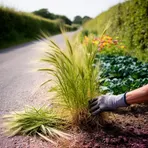
A grass that grows wild along roads and hedges and is often a weed
Surface Forms
Morphology
Hordeum + murinum
This is a Latin binomial (scientific name). While 'Hordeum' identifies a grass genus, 'murinum' is not an English word and the combination functions as an arbitrary taxonomic label rather than a compositional English phrase, so a B1 learner knowing the parts would not be able to derive the species meaning.
Etymology
Hordeum murinum comes from Latin: Hordeum means 'barley' and murinum comes from 'murus', meaning 'wall', because this barley-like grass often grows on walls and waste ground. So the name describes a barley-type plant that lives by walls and roadsides.

