
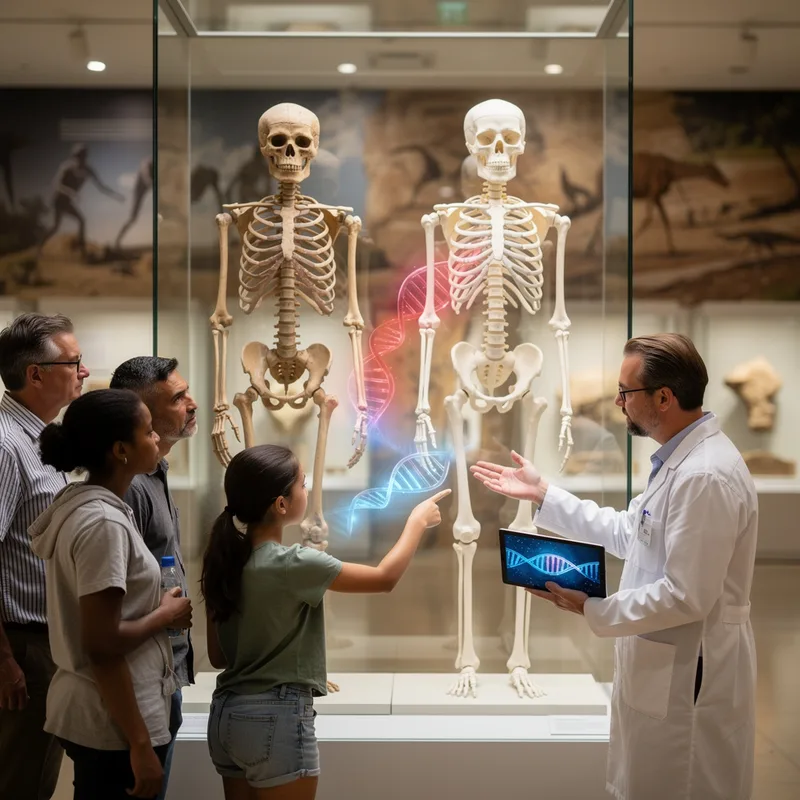
Homo sapiens
 3
3.2
3
3.2

- proper noun
- /ˈhoʊmoʊ ˈseɪpiənz/
- Specialized
- But the investigation of the timing and direction of the dispersal of Homo sapiens from Africa into Asia has been hampered by a lack of archaeological evidence.
- dispersal of Homo sapiens
- spread of Homo sapiens
Loading YouTube…
Watch on YouTubeHello everyone, all of you and every person living today are modern humans or Homo sapiens.
- Hello everyone, all of you and every person living today are modern humans or Homo sapiens.
- And that raises the question of what Homo sapiens is.
Examples
-
A human being is defined as a member of the species Homo sapiens.
Blog text (27) -
Much later, within the last 100,000 years, Homo sapiens emerged, also in East Africa, and replaced Homo erectus throughout the Old World.
Academic text (1997) -
To answer the question, why is Homo sapiens so prone to religious belief?
Academic text (2006) -
Our current knowledge shows that a mass extinction serious enough to destroy Homo sapiens might occur every few tens of millions of years.
Academic text (2003) -
Every scientist on the planet agrees that a human fetus is a member of the species Homo sapiens.
Blog text (27) -
In short, a land ethic changes the role of Homo sapiens from conqueror of the land-community to a plain member and fellow citizen of it.
Academic text (2003) -
Until recently, it was widely assumed that a "creative explosion" originated with the arrival of modern humans, Homo sapiens, in Europe approximately 40,000 years ago, about 60,000-110,000 years after they began their evolution in Africa.
Academic text (2002) -
Anatomically modern humans, Homo sapiens, are distinguished by their complex use of language and thought.
-
Research indicates that Homo sapiens have adapted to various environments across the globe throughout history.
-
The archaeological discovery revealed tools made by Homo sapiens dating back tens of thousands of years.
Synonyms
 400
1.0
400
1.0
All people on Earth viewed as a single group
 111
1.5
111
1.5
All people who live on Earth as one group
 3
1.0
3
1.0
All people as one group
 3
3.7
3
3.7
The group that includes all living human beings
 1
6.5
1
6.5
A group of humans that includes all living people

A human described as an animal to show basic natural instincts
Surface Forms
Morphology
The binomial is a compositional taxonomic name: 'Homo' (the human genus) combined with 'sapiens' (pertaining to modern humans/wise) directly denotes the species. Because the meaning is a straightforward combination of the constituents and Latin scientific names map consistently across languages, a learner who knows both words can infer the MWE's meaning.
Etymology
Homo sapiens is a scientific Latin name made of Homo 'man' and sapiens 'wise'. Scientists chose it to mark our species as different from earlier human kinds because of our thinking and culture, so it is the species name for modern humans.