

Hippotragus niger
- noun
- Specialized
- The Hippotragus niger is admired for its striking black coat and impressive horns.
Examples
-
Wildlife photographers travel far to capture images of the elusive Hippotragus niger in its natural habitat.
-
The park ranger gave a lecture on the conservation status of Hippotragus niger.
-
The Hippotragus niger is often found in savannah habitats.
-
Have you ever seen a Hippotragus niger in the wild?
-
The Hippotragus niger is known for its distinctive back-curving horns and black fur.
-
In East Africa, the Hippotragus niger roams the open savannah, a sight cherished by wildlife enthusiasts.
-
Park researchers monitor the population of Hippotragus niger to ensure its survival in the wild.
Synonyms
 28
2.9
28
2.9

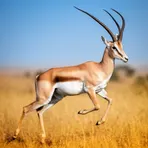
An animal with long legs and curved horns that runs fast in Africa and Asia
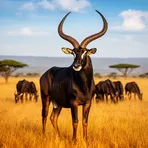
A large African animal like a deer with a dark coat and long curved horns
Surface Forms
Morphology
Hippotragus + niger
The name is a Linnaean binomial combining the genus 'Hippotragus' (a large antelope) with the epithet 'niger' (Latin for 'black'), so its meaning — a black member of the Hippotragus genus — is directly compositional rather than idiomatic. Although 'niger' is a Latin word and may be unfamiliar to many learners, if a learner knows both constituents the species name's meaning is transparently derived from them.
Etymology
Hippotragus niger comes from older Greek and Latin words: hippo meaning 'horse', tragus meaning 'goat', and niger meaning 'black'. The name gives a clear picture — a large, dark antelope with a horse-like head and strong horns that curve back, so the scientific name describes how the animal looks.