

Hippoglossus stenolepis
- noun
- /ˌhɪpəˈɡlɒsəs ˌstɛnəˈlɛpɪs/
- Specialized
- Scientists are studying the migration patterns of Hippoglossus stenolepis in the Bering Sea.
Examples
-
The Hippoglossus stenolepis can grow to an impressive size and is popular among sport fishermen.
-
The commercial fishing industry depends heavily on the Hippoglossus stenolepis for its high-quality meat.
-
The Hippoglossus stenolepis is a popular fish for commercial fishing.
-
Many chefs prefer Hippoglossus stenolepis for its firm texture.
-
Scientists are studying the migration patterns of Hippoglossus stenolepis in the Bering Sea.
-
The Hippoglossus stenolepis can grow to an impressive size and is popular among sport fishermen.
-
The commercial fishing industry depends heavily on the Hippoglossus stenolepis for its high-quality meat.
Synonyms
 18
3.7
18
3.7

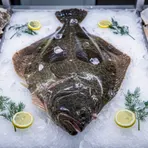
A large flat fish that lives in cold northern seas and is often eaten

A large flatfish that lives in the northern Pacific and is eaten as food
Surface Forms
Morphology
Hippoglossus + stenolepis
This is a Linnaean binomial: the genus Hippoglossus signals it is a type of large flatfish, so a learner who knows the genus can infer it names a species of that fish. However the specific epithet 'stenolepis' is a Greek/Latin compound not in common learner dictionaries and does not directly yield the common name "Pacific halibut," so the meaning is only partially predictable.
Etymology
Hippoglossus stenolepis gets its name from old Greek words: hippo- meaning 'horse' and glossus meaning 'tongue', plus steno- 'narrow' and lepis 'scale'. The name gives a simple picture of a flat, long fish with narrow scales, and that is why this scientific name refers to the Pacific halibut.