
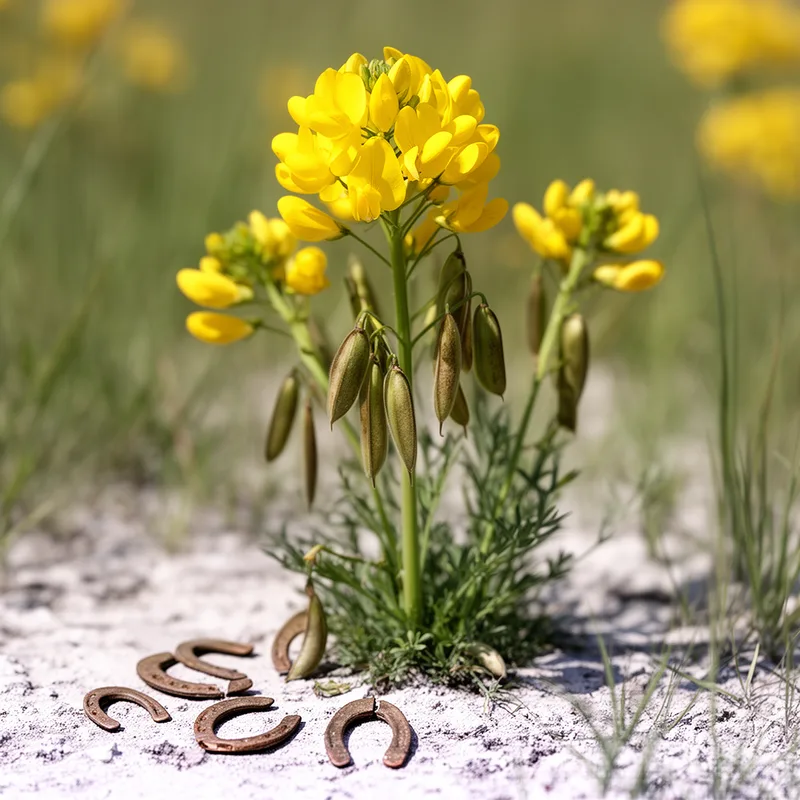
Hippocrepis comosa
- noun
- UK
- We identified Hippocrepis comosa by its distinctive horseshoe-shaped seed pods and yellow flowers.
Examples
-
The wildflower meadow was full of Hippocrepis comosa, adding bright splashes of yellow among the grasses.
-
Gardeners often plant Hippocrepis comosa on chalky soils, where it thrives in sunny, open spaces.
-
The Hippocrepis comosa blooms beautifully in spring.
-
I saw a Hippocrepis comosa by the roadside.
-
Gardeners often plant Hippocrepis comosa on chalky soils, where it thrives in sunny, open spaces.
-
The wildflower meadow was full of Hippocrepis comosa, adding bright splashes of yellow among the grasses.
-
We identified Hippocrepis comosa by its distinctive horseshoe-shaped seed pods and yellow flowers.
Synonyms

A small wild plant that flowers every year with yellow flower clusters and pods shaped like small horseshoes
Surface Forms
Morphology
Hippocrepis + comosa
This is a Latin binomial (a scientific plant name) rather than a compositional English phrase; as a proper taxonomic name it functions as an identifier and not a transparently built English expression. One constituent ('comosa') lacks an English dictionary definition here and even if 'Hippocrepis' hints at the genus (horseshoe vetch), a typical B1 learner who knows the listed constituents would not be able to derive the full botanical description from them.
Etymology
Hippocrepis comosa may come from Greek parts hippo (meaning 'horse') and crepis (meaning 'shoe') because its flat seed pods break into little pieces that look like tiny horseshoes. The word comosa means 'hairy' and describes the plant's small, hair-like flower parts.

