
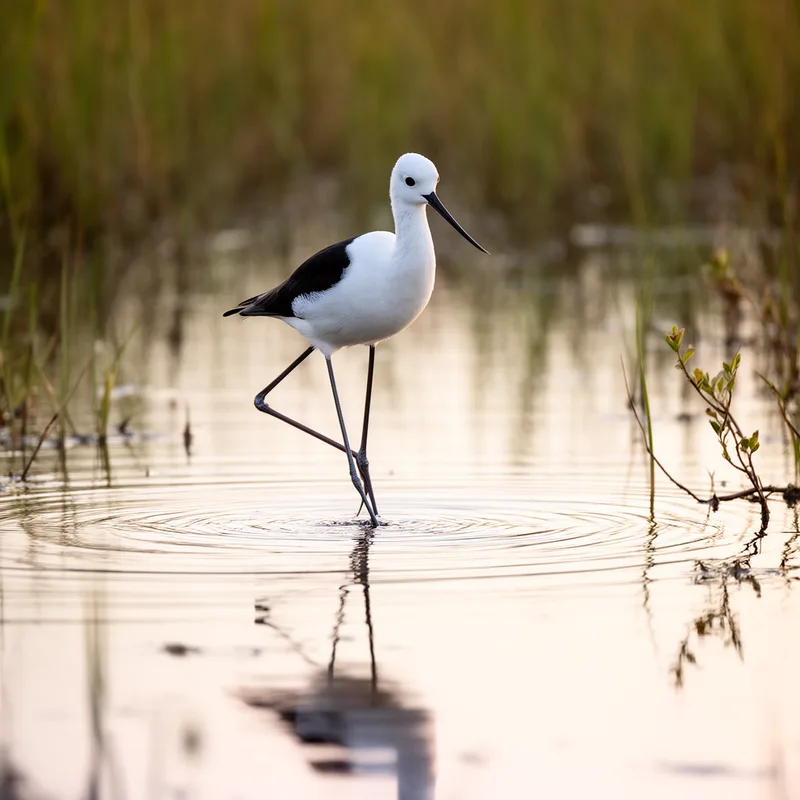
Himantopus stilt
- noun
- Specialized
- A Himantopus stilt was spotted feeding in the shallow waters of the marsh.
Examples
-
Conservationists are monitoring the breeding sites of the Himantopus stilt to protect the species.
-
The black-and-white plumage of the Himantopus stilt makes it easy to identify.
-
The Himantopus stilt is known for its striking long legs.
-
Many Himantopus stilts can be seen at the marshes.
-
A Himantopus stilt was spotted feeding in the shallow waters of the marsh.
-
Conservationists are monitoring the breeding sites of the Himantopus stilt to protect the species.
-
The black-and-white plumage of the Himantopus stilt makes it easy to identify.
Synonyms

 1
6.9
1
6.9

A long-legged bird that wades in shallow water like marshes or lagoons

 1
9.6
1
9.6
A long-legged black-and-white bird that stands in shallow water to find food
 1
9.5
1
9.5
A long-legged black and white bird that wades in shallow ponds and marshes

A long-legged bird that wades in shallow water and has three toes
Surface Forms
Morphology
The compound names directly combine a genus name that denotes wading birds with long legs ('Himantopus') and the common noun 'stilt' (a very long-legged wading bird), so a learner who knows both constituents can immediately infer this is a long‑legged wading bird species. This is a literal, compositional naming pattern (common in species names) and therefore transparent to learners familiar with the parts.
Etymology
Himantopus stilt comes from the name Himantopus, a Greek word that may mean 'strap', and the English word stilt, which are long supports. The bird's very long, thin legs look like stilts, so the name points to a 'long-legged' wading bird.