
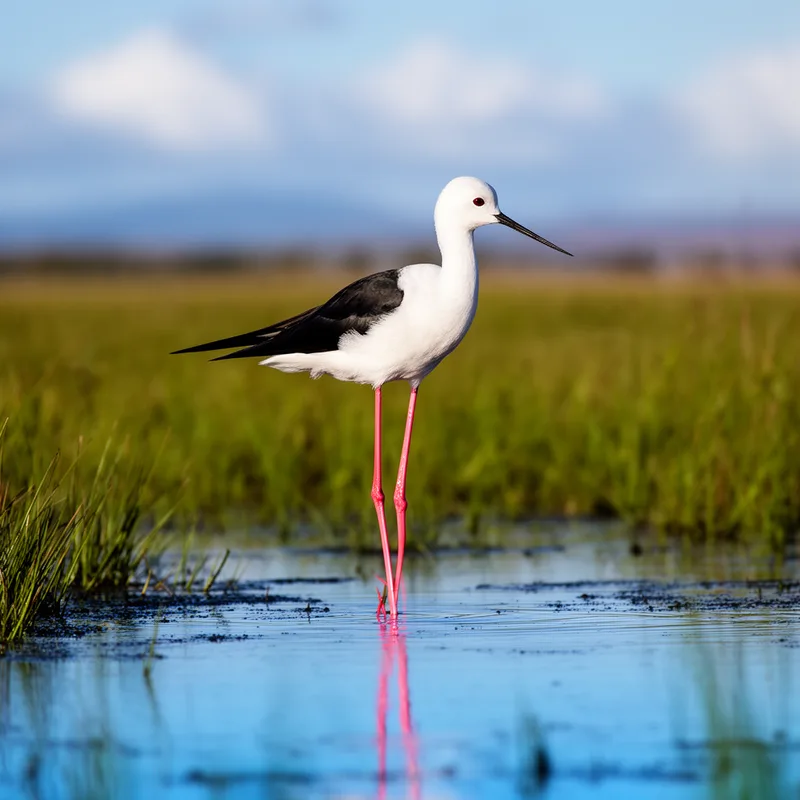
Himantopus himantopus leucocephalus
- noun
- Specialized
- The Himantopus himantopus leucocephalus is easily identified by its black wings and white body.
Examples
-
Researchers observed several Himantopus himantopus leucocephalus nesting along the New Zealand wetlands.
-
The Himantopus himantopus leucocephalus is often seen wading in shallow waters.
-
Birdwatchers traveled to Australia to photograph the rare Himantopus himantopus leucocephalus in its natural habitat.
-
Have you ever spotted a Himantopus himantopus leucocephalus in Australia?
-
Birdwatchers traveled to Australia to photograph the rare Himantopus himantopus leucocephalus in its natural habitat.
-
Researchers observed several Himantopus himantopus leucocephalus nesting along the New Zealand wetlands.
-
The Himantopus himantopus leucocephalus is easily identified by its black wings and white body.
Synonyms
A tall wading bird with long thin legs, a white head, and black wings
Surface Forms
Morphology
Himantopus + Himantopus + leucocephalus
The genus name Himantopus clearly signals a type of wading bird/stilt, so that part of the name is predictable from its constituents. The subspecies epithet leucocephalus is a low-frequency Latin/Greek compound (leuco- ‘white’, -cephalus ‘headed’) that is not accessible to an average B1 learner and even if analysed gives only partial information about coloration, so the whole name is only partially transparent.
Etymology
Himantopus himantopus leucocephalus comes from old Greek words: Himantopus means 'strap-foot' and leucocephalus means 'white-headed', a neat picture of a long-legged stilt with a white head and dark wings. That's why the name describes this bird's long legs and mostly white body today.

