
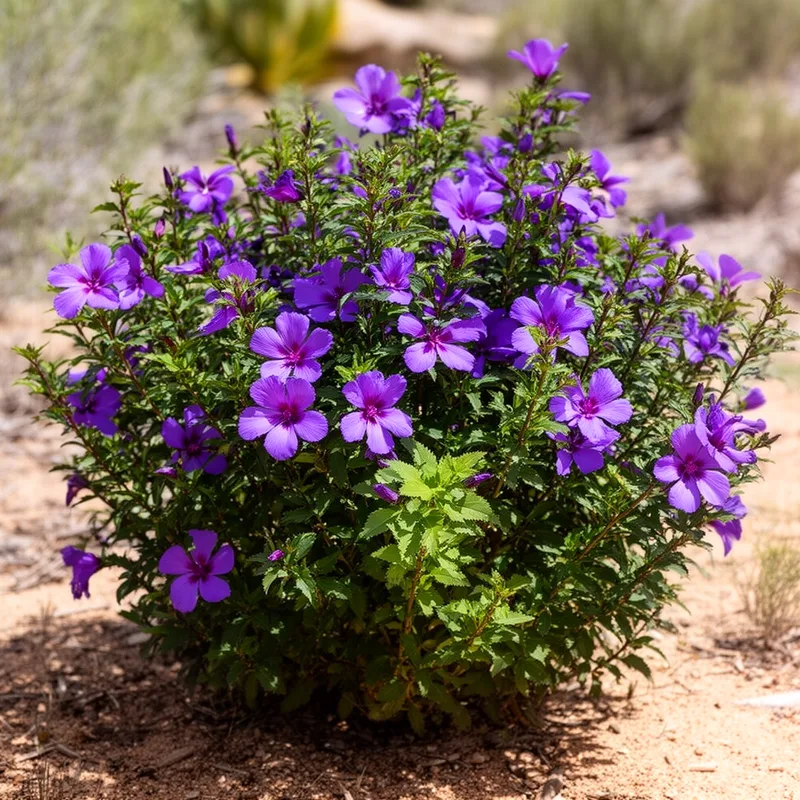
Hibiscus farragei
- noun
- Specialized
- The garden features native species such as Hibiscus farragei, appreciated for its ornamental value and resilience.
Examples
-
Botanists debated whether Hibiscus farragei should remain a separate species or be included in the broader Hibiscus genus.
-
Hibiscus farragei thrives in well-drained Australian soils and produces vibrant purple flowers in spring.
-
The Hibiscus farragei is known for its vibrant purple flowers.
-
Have you ever seen a Hibiscus farragei in bloom?
-
Hibiscus farragei grows well in hot climates, making it a popular choice for gardens in Australia.
-
Many people enjoy the beauty of Hibiscus farragei for its eye-catching purple flowers.
-
In spring, the vibrant blooms of Hibiscus farragei brighten up landscapes across southern Australia.
Synonyms
A small bush with purple flowers that grows in parts of Australia

A small bush from southern and western Australia with purple flowers and toothed leaves
Surface Forms
Morphology
Hibiscus + farragei
Knowing 'Hibiscus' lets a learner infer this is a type of hibiscus plant (genus + species naming is a transparent compositional pattern), but 'farragei' is a Latin species epithet/proper name with no lexical meaning for learners, so the specific identity or descriptive sense cannot be derived. The overall category (a hibiscus shrub) is predictable, but the detailed meaning is not, making the expression partially but not fully transparent.
Etymology
Hibiscus farragei may come from a person named Farrage who found or studied this Australian shrub. The word Hibiscus shows the plant group and the second part farragei was added 'to honor' that person, so the name tells you both the kind of flower and who it is named after.

