
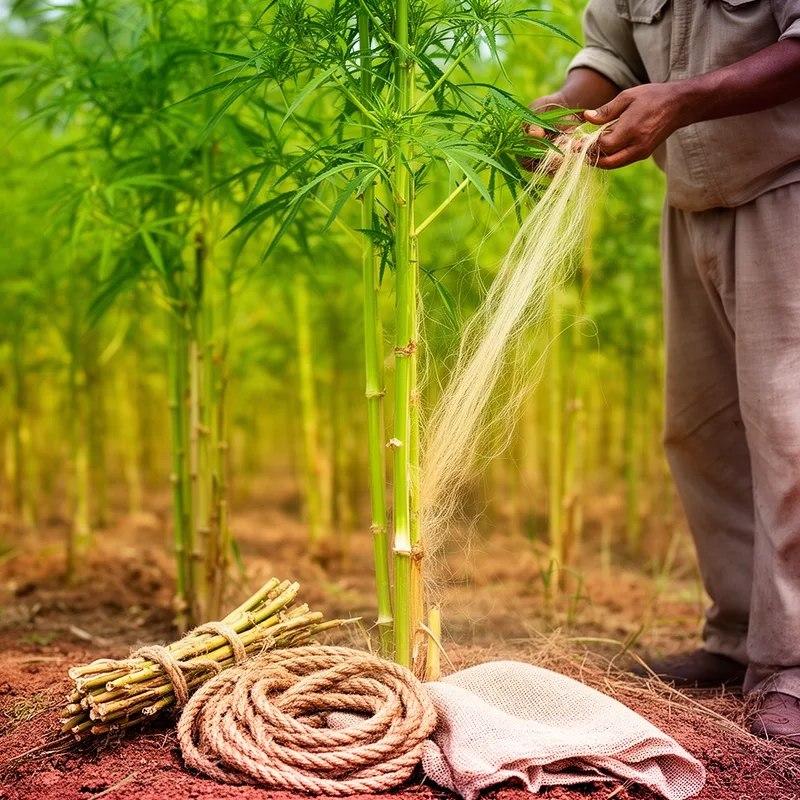
Hibiscus cannabinus
- noun
- Specialized
- The stems of Hibiscus cannabinus are harvested to make rope and coarse cloth.
Examples
-
Researchers are developing new paper products using Hibiscus cannabinus fiber.
-
Farmers in India cultivate Hibiscus cannabinus for its fiber.
-
Hibiscus cannabinus is widely grown for its strong, useful fiber known as kenaf.
-
The Hibiscus cannabinus plant grows well in tropical climates.
-
Hibiscus cannabinus is widely grown for its strong, useful fiber, which is commonly used in textiles.
-
Farmers in India cultivate Hibiscus cannabinus because its fiber is valued for making eco-friendly products.
-
The stems of Hibiscus cannabinus are often processed to create durable ropes and industrial fabrics.
Synonyms


 1
9.9
1
9.9
A tall annual plant with strong fibers in its stalks that people use to make rope, cloth and paper

A plant that produces strong fibers used to make rope and cloth

A tall plant with strong natural fibers used to make rope and cloth
A plant grown for strong fibers used to make rope and cloth

A plant with strong fibers used to make rope and cloth

A tall Indian plant grown for strong fibers used to make rope and cloth

A tall tropical plant with strong soft fiber used to make rope and sacks
A plant grown for strong fibers used to make rope
Surface Forms
Morphology
Hibiscus + cannabinus
This is a Latin binomial (scientific) name rather than a normal English compound, and the second element 'cannabinus' is not a regular English word or transparently meaningful to a B1 learner. Understanding that it refers to a fiber-producing plant requires specialized botanical knowledge (or knowledge that 'cannabinus' relates to hemp), so the meaning cannot be reliably derived from the constituents by an average B1 learner.
Etymology
Hibiscus cannabinus puts together Hibiscus (the hibiscus flower) and cannabinus, an old word meaning 'like hemp'. Because this plant's stems make strong fiber like hemp, the name points to a plant grown for useful fiber.