

Hessian fly
- noun
- /ˈhɛʃən flaɪ/
- Specialized
- The Hessian fly caused severe damage to wheat crops across the Midwest last year.
Examples
-
Pesticides are sometimes used to control Hessian fly populations in vulnerable regions.
-
Farmers monitor their fields for signs of Hessian fly infestations to prevent serious yield loss.
-
The Hessian fly is a serious pest for wheat farmers.
-
Many farmers are concerned about Hessian flies this season.
-
The Hessian fly can severely damage wheat crops if not managed properly.
-
Farmers often struggle with infestations of the Hessian fly during the growing season.
-
To protect their harvest, growers must identify and control the Hessian fly early.
Synonyms
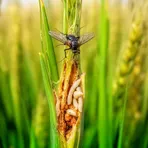
A small fly whose young eat wheat plants and damage crops
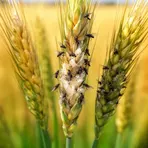
A group of small flies that damage cereal crops like wheat
Surface Forms
Morphology
Hessian + fly
The compound clearly marks a type of fly (fly = insect), so a learner who knows both words would infer it denotes a particular kind of fly; however the specific sense — that its larvae infest and damage wheat — cannot be predicted from 'Hessian' (a proper/adjectival element unlikely to be meaningful to a B1 learner) and is historically/entomologically specific. Because the headword yields the general category but not the important pest meaning, the expression is only partially transparent.
Etymology
Hessian fly gets its name from a popular 1700s story: people thought tiny flies were brought to North America in the straw used by Hessian soldiers and then damaged local 'wheat' crops. So the name helps you remember that this small fly attacks and harms 'wheat'.

