
Heracleum sphondylium
- noun
- Specialized
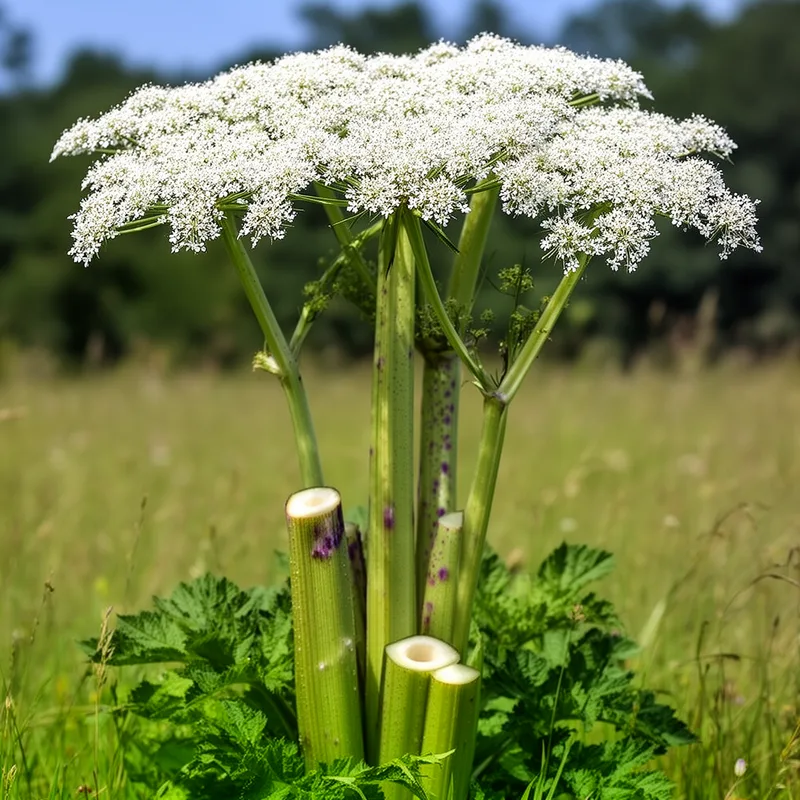
- In summer, Heracleum sphondylium produces large umbels of white flowers.
Examples
-
Be careful not to touch Heracleum sphondylium without protection, as its sap can cause skin irritation.
-
The stems of Heracleum sphondylium are hollow and often marked with purple spots.
-
Gardeners should be cautious when handling Heracleum sphondylium due to its sap.
-
The Heracleum sphondylium grows abundantly in the wild.
-
Many gardeners dislike the Heracleum sphondylium because it can be invasive.
-
When hiking in the countryside, you might encounter Heracleum sphondylium with its towering height and large clusters of white flowers.
-
The plant Heracleum sphondylium is easily recognizable by its thick stems and broad, green leaves.
Synonyms



 1
9.3
1
9.3
A tall plant with thick stems and groups of white or purple flowers that can irritate the skin
Surface Forms
Morphology
Heracleum + sphondylium
This is a Latin binomial (genus + species) used as a taxonomic label rather than a compositional English phrase; the species epithet 'sphondylium' is not a transparent English word and is not in the dictionary provided. Even if a learner recognises 'Heracleum' as a plant genus, that alone does not yield the common name or the descriptive meaning (tall, coarse, white‑flowered hogweed), so the overall meaning is not derivable by a B1 learner from the parts without specialist knowledge.
Etymology
Heracleum sphondylium may come from Greek: Heracleum is named for the hero 'Heracles' because the plant is tall and strong, and sphondylium may come from a word for 'vertebra' or 'knot' that points to its thick, jointed stems. So, the name gives the image of a big, sturdy plant, which fits the tall, rough plant we know today.