

Hemachatus haemachatus
- noun
- Specialized
- The Hemachatus haemachatus, commonly known as the rinkhals, can spit its venom at predators for defense.
Examples
-
The Hemachatus haemachatus can spit its venom at predators as a defense mechanism.
-
Farmers in southern Africa are often wary of the Hemachatus haemachatus because of its potent venom.
-
Researchers studied the behavior of the Hemachatus haemachatus in its natural habitat.
-
The Hemachatus haemachatus is known for its ability to spit venom.
-
Have you ever seen a Hemachatus haemachatus in the wild?
-
Farmers in southern Africa are often wary of the Hemachatus haemachatus because of its potent venom.
-
Spotting a Hemachatus haemachatus in its natural habitat can be quite a thrilling experience for wildlife enthusiasts.
Synonyms


 1
6.4
1
6.4
A dangerous African snake that defends itself by spitting venom into the eyes
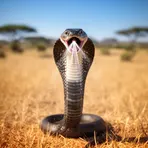
A venomous snake from southern Africa that can spit venom several feet
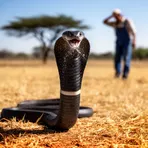
A venomous snake from southern Africa that can spit venom to defend itself

A venomous snake that lives in southern Africa and can spit venom
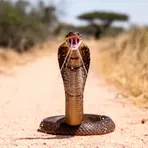
A venomous southern African snake that sprays venom at a threat, often to hit the eyes
Surface Forms
Morphology
Hemachatus + haemachatus
This is a taxonomic Latin binomial rather than an everyday lexical phrase: if a learner already knows 'Hemachatus' as a genus of spitting, venomous snakes they can infer the MWE names that species, but the components are not ordinary English words and the second element provides no transparent, compositional meaning to a B1 learner. Understanding the full definition (spitting venom, defensive behaviour) therefore depends on prior biological or lexical knowledge rather than simple composition.
Etymology
Hemachatus haemachatus may come from the Greek part hema meaning 'blood', because the snake often has red-brown bands on its neck. That's why the name gives a strong 'blood-neck' image and helps people remember this dangerous snake that can spit venom to defend itself.