

Heliozoa
- noun
- /ˌhiːliəˈzoʊə/
- Specialized
- Under the microscope, Heliozoa appear as tiny creatures radiating slender arms in all directions.
Examples
-
Researchers use Heliozoa to study movement and feeding behaviors in protozoa.
-
Biologists often observe Heliozoa in freshwater environments due to their distinctive spherical shape and long pseudopodia.
-
Many biology students are fascinated by the unique structure of Heliozoa found in freshwater ponds.
-
The Heliozoa are fascinating organisms found in freshwater.
-
Did you know that Heliozoans can be seen under a microscope?
-
In aquatic ecosystems, Heliozoa play a role in the microbial food web, capturing small particles for nourishment.
-
Studying Heliozoa helps scientists understand more about protozoan behavior and their adaptations to freshwater habitats.
Synonyms
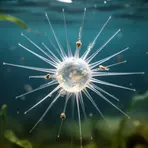
A one-celled creature with a round body and long thin arms that lives in fresh water like ponds
Surface Forms
Morphology
Heliozoa = heliozoan (semi-transparent) = helio + zoa
Formed from scientific combining forms helio- + -zoa; the structure is recognizable to learners familiar with scientific vocabulary but not fully transparent to an average B1 learner.
Etymology
Heliozoa comes from Greek roots helios meaning 'sun' and zoa meaning 'animals', so the name literally means 'sun animals'. The zoa part is like the English word zoo, which helps you remember it means 'animals'. Under the microscope they look like tiny round creatures with long arms spreading out like sun rays, which is why they are also called 'sun animalcules'.

