
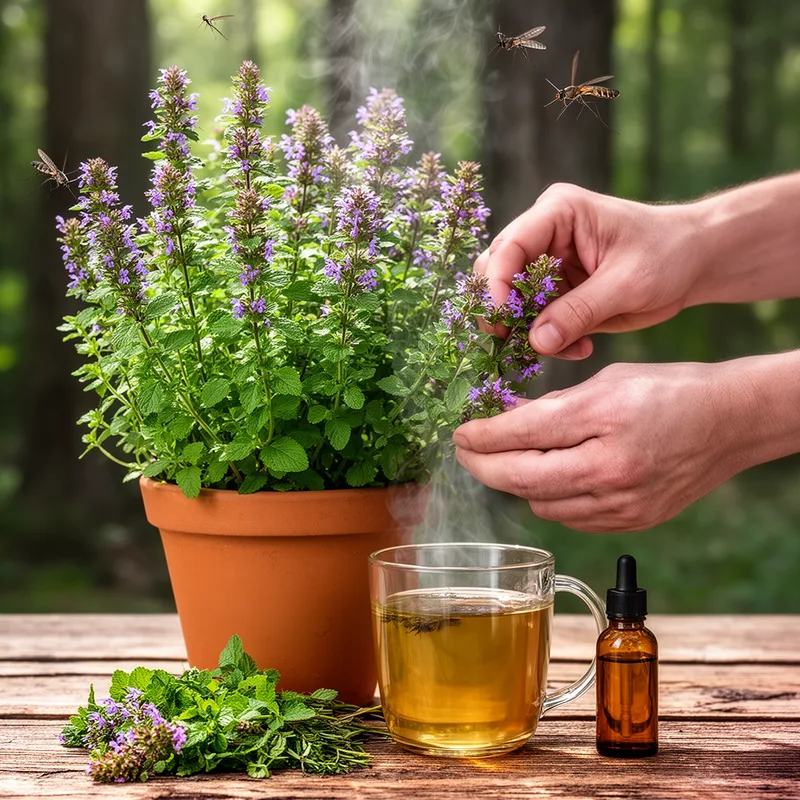
Hedeoma pulegioides
- noun
- Specialized
- Botanists collected samples of Hedeoma pulegioides along the forest edge for study.
Examples
-
Hedeoma pulegioides is sometimes used in folk remedies and to repel insects naturally.
-
The essential oil extracted from Hedeoma pulegioides should be used cautiously, as it can be toxic in large amounts.
-
The Hedeoma pulegioides plant is known for its aromatic properties.
-
Many herbalists use Hedeoma pulegioides for its medicinal benefits.
-
Hedeoma pulegioides is often utilized in natural remedies for its insect-repellent properties.
-
The leaves of Hedeoma pulegioides are sometimes brewed into a tea for digestive ailments.
-
Farmers use Hedeoma pulegioides to keep pests away from their crops during the growing season.
Synonyms


 1
9.9
1
9.9
A small mint plant with a strong smell used to repel insects and for simple herbal remedies

A hairy plant with purple blue flowers that keeps insects away and people sometimes use in folk medicine
Surface Forms
Morphology
Hedeoma + pulegioides
This is a Latin binomial (scientific) name rather than a normal English phrase; its meaning ('a particular herb') depends on taxonomic knowledge rather than simple composition of everyday English words. One constituent ('pulegioides') is not a standard English word here and 'Hedeoma' is a technical genus name, so a B1 learner who knows ordinary English vocabulary would not be able to derive the specific botanical meaning.
Etymology
Hedeoma pulegioides takes part of its name from 'pennyroyal': the second part, pulegioides, means 'like pennyroyal', a mint people used to keep fleas and other bugs away. So the name points to a small mint with a strong smell that was used as an insect repellent and in folk medicine.