
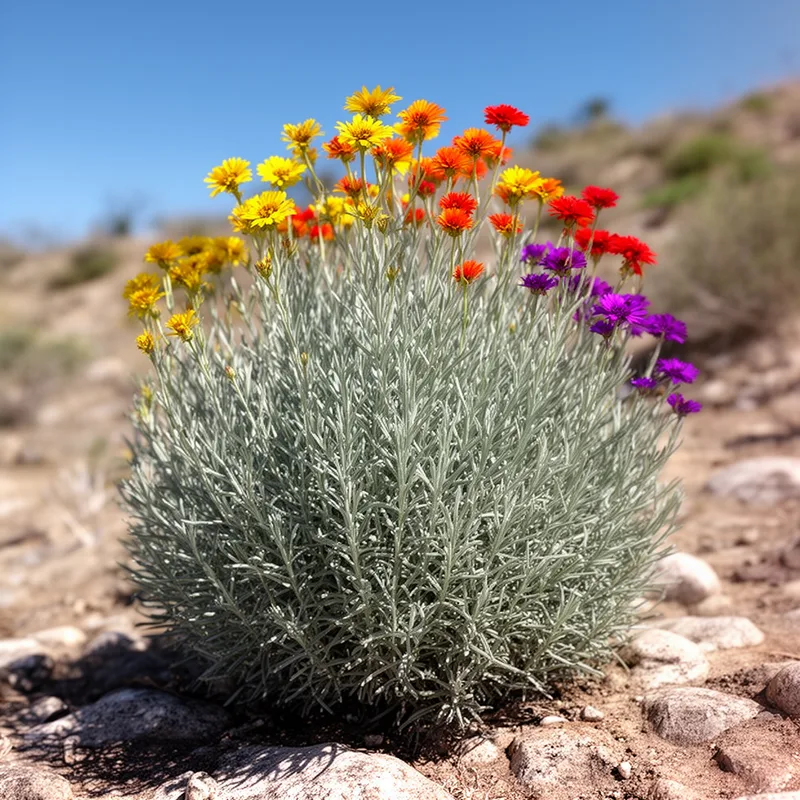
Hazardia cana
- noun
- Specialized
 :
Hazardia cana
:
Hazardia cana
- The distinctive silver leaves of Hazardia cana help it survive in dry environments.
Examples
-
The Hazardia cana is known for its unique yellow flowers.
-
Hazardia cana is native to California, where it grows on rocky slopes.
-
Botanists study Hazardia cana for its unique adaptation to arid climates.
-
Have you ever seen a Hazardia cana in bloom?
-
Hazardia cana typically flourishes in the deserts of the southwestern United States, showcasing its beautiful yellow flowers.
-
The Hazardia cana thrives in arid regions, where its white felted leaves provide insulation against the heat.
-
Many hikers admire the Hazardia cana for its striking appearance among the rocky terrain of California.
Synonyms
A shrub from western North America with soft white leaves and yellow flowers that turn red-purple
Surface Forms
Morphology
Hazardia + cana
This is a scientific binomial (proper) name: knowing 'Hazardia' (a genus name) and 'cana' (an untranslated/unknown item) does not allow a B1 learner to infer the meaning 'a species of western American shrub'. The elements are proper names/Latin terms and part of specialized botanical nomenclature rather than compositional English vocabulary, so the meaning is not derivable from the constituents.
Etymology
Hazardia cana is named from the genus Hazardia and the Latin word cana, which means 'gray' or 'white-haired' and describes the plant's soft silver leaves. So the name helps you remember the shrub by its gray, fuzzy leaves.

