
Hathor
 2
9.9

- proper noun
- Literature
- The temple dedicated to Hathor was a place where music and celebration flourished, honoring her connection to joy.
- Hathor, the goddess
Examples
-
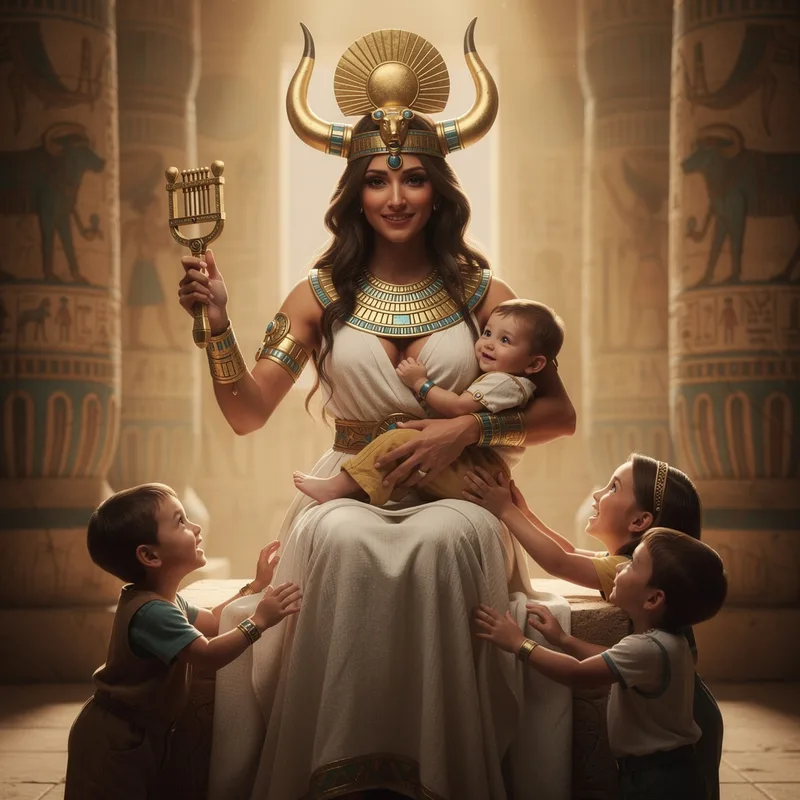
The goddess Hathor is often depicted as a symbol of love and beauty in ancient Egyptian art.
-
In ancient Egypt, people would pray to Hathor for blessings related to motherhood and fertility.
-
This example depicts the head of Hathor, a goddess associated with women, love, dance, and music.
Academic text (2009) -
For Andrea, it is Hathor that represents the essence of the divine feminine.
Academic text (2010) -
Finally, there is Hathor, the Goddess of unconditional love, typically represented with cow ears to represent passivity, gentleness, and total giving.
Academic text (2010) -
We arrived at Luxor at about 8 o'clock that evening and were up early the next morning to visit Dendara, where there was a late Pharaonic temple dedicated to Hathor, the Goddess of love and sensuality.
Academic text (2010) -
Her complex character was reflected by an identity that merged at times with that of other goddesses: Isis, the model of wifely love and devotion; Hathor, goddess of love and protector of women.
Academic text (2006)
Surface Forms
Etymology
Hathor comes from old Egyptian words written ḥwt-ḥr, which mean 'House of Horus'. So she was seen as a caring, sky-connected goddess often shown with cow horns and a sun disk, and that is why she is the goddess of love, music, beauty and motherhood.