
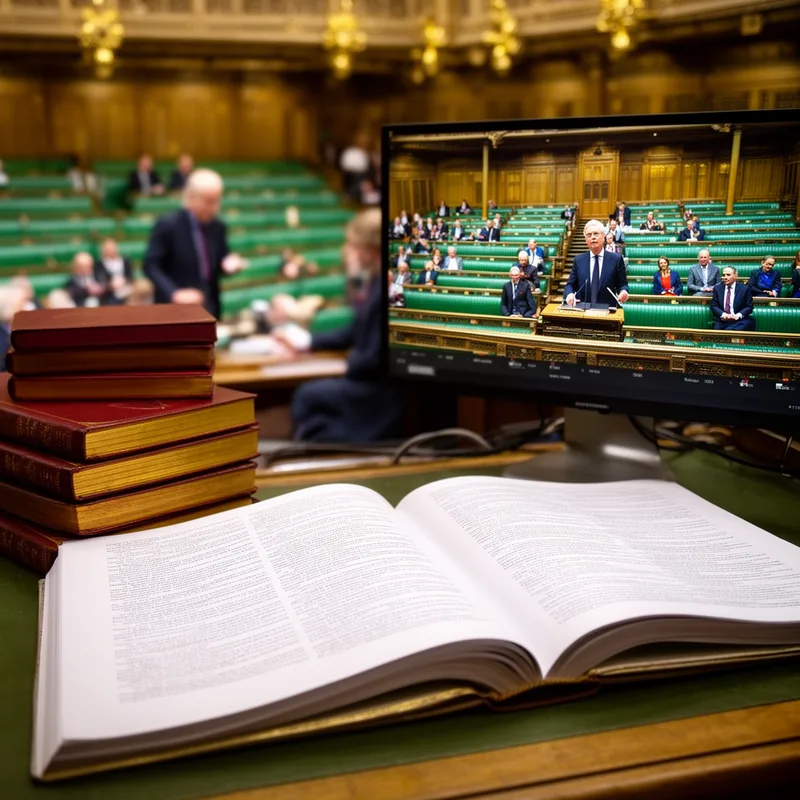
Hansard


 1
9.6
- noun
- /ˈhæn.sɑːd/
- UK
- It was first presented in Caslon & Catherwood's 1821 type specimen, and as early as 1825, in his Typographia, Thomas Hansard called the type a "typographic monstrosity."
- Hansard's parliamentary
Examples
-
Thomas Curson Hansard wrote in 1825 that Bodoni's types had "that beautiful and perfect appearance, which we find it difficult and highly expensive to equal."
Blog text (19) -
The story follows Shelley Hansard, a crack psychotic, heroin-addicted London call girl who gets the opportunity to take revenge on a client who raped her.
Blog text (20) -
And I read that in Hansard and I, I just, I couldn't believe it.
-
His work as a Member of Parliament was often reported in the national press and is chronicled in detail in Hansard.
Academic text (2001) -
(n36) Parliamentary Business, Hansard Debates, House of Commons, U.K., Dec. 18, 2003.
Academic text (2010) -
Do they read it all in Hansard—with a crib to read it with—"Welsh Tithes: Dr. Clifford answered."
Blog text (31) -
They play AMAZING music: Glen Hansard, M83, The Radio Dept, Chairlift, Grimes, Nina Simone, and so much more wonderfully.
Blog text (1) -
The key points of the debate can be found in Hansard, which records the official proceedings of the Parliament.
-
Many important speeches were documented in Hansard, making it a valuable resource for historians.
-
Researchers often refer to Hansard to verify what was said during parliamentary sessions.
Synonyms
 37
6.1
An official written record of what happens at a meeting or conference
 6
6.4
The official written report of what members of the US Congress say and how they vote
Surface Forms
Etymology
Hansard comes from the name of a printer, the Hansard family, who in the 1800s printed the reports of Parliament and whose name stuck to those printed reports. So Hansard now means the 'official written record of parliamentary debates'.