
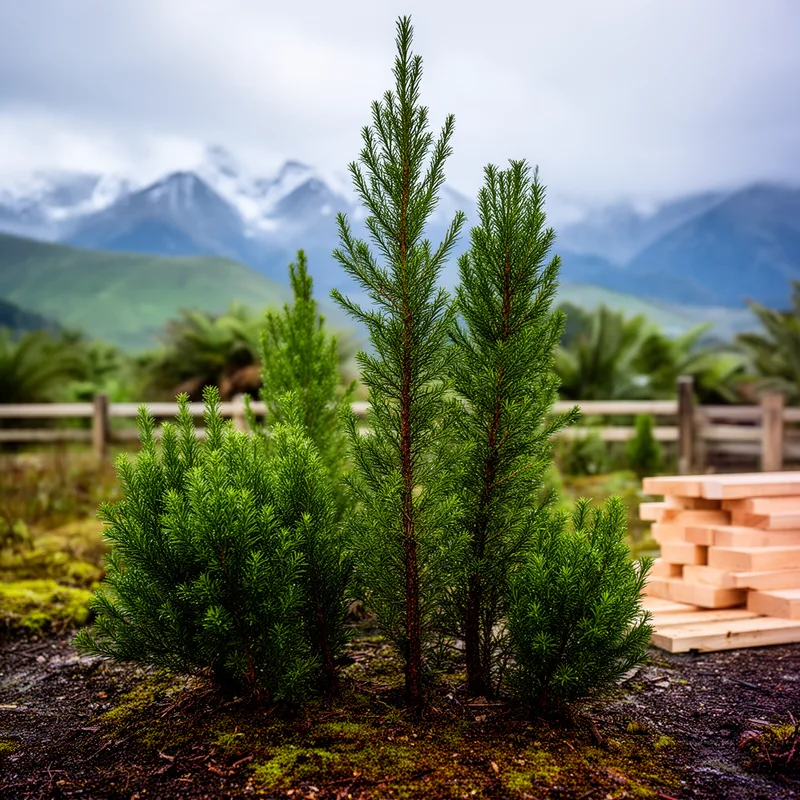
Halocarpus
- noun
- Specialized
- Halocarpus species are well-adapted to the cool, wet climate of southern New Zealand.
Examples
-
The timber of Halocarpus is sometimes used in local construction and woodworking projects.
-
Conservation efforts have focused on protecting Halocarpus habitats from deforestation.
-
The Halocarpus tree thrives in the humid climate of New Zealand.
-
Many Halocarpus species are found in forested areas.
-
Halocarpus species grow tall and strong in the dense forests of New Zealand.
-
The Halocarpus tree is valued for its unique wood and ecological importance.
-
Hikers often encounter Halocarpus varieties while exploring New Zealand's national parks.
Surface Forms
Etymology
Halocarpus comes from Greek parts halo- meaning 'sea' or 'salt' and -carpus meaning 'fruit', so it literally means 'sea-fruit'. That's why Halocarpus is the name for a group of trees and shrubs from New Zealand, and the image of 'sea-fruit' can help you remember it is a plant name.

