
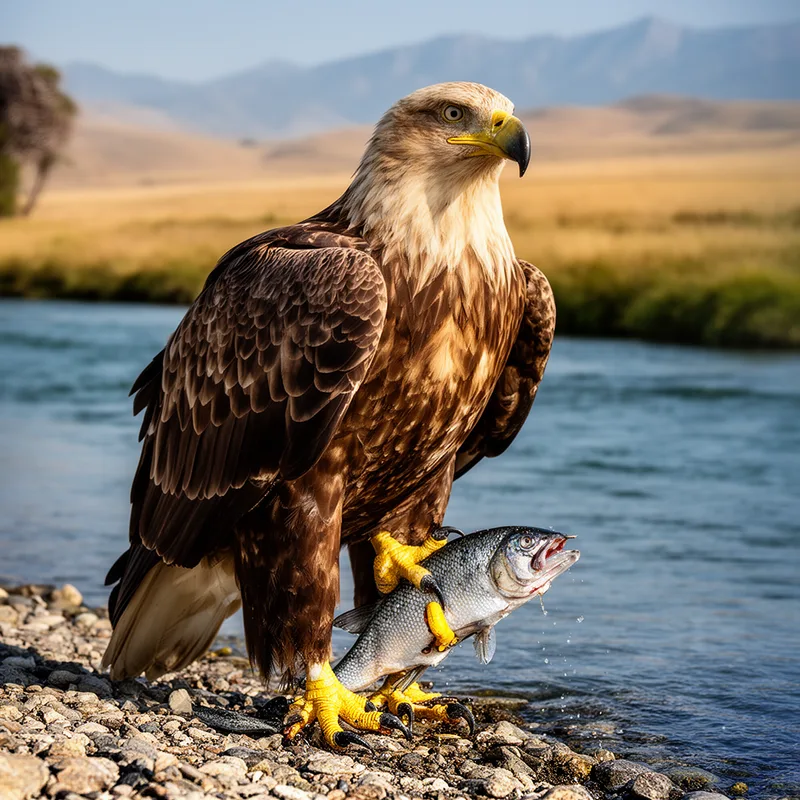
Haliaeetus leucorhyphus
- noun
- Specialized
- Unlike other eagles, the Haliaeetus leucorhyphus primarily feeds on fish and occasionally waterfowl.
Examples
-
The Haliaeetus leucorhyphus is considered vulnerable due to loss of habitat in its native range.
-
Researchers observed a Haliaeetus leucorhyphus nest by the riverbank during their study.
-
The Haliaeetus leucorhyphus is a magnificent bird of prey.
-
Have you ever seen a Haliaeetus leucorhyphus in the wild?
-
The Haliaeetus leucorhyphus is often seen soaring over lakes in search of fish.
-
Conservation efforts are being made to protect the Haliaeetus leucorhyphus from habitat destruction.
-
During the summer, the Haliaeetus leucorhyphus can be spotted nesting in tall trees near water bodies.
Synonyms

A large bird that catches fish from rivers or lakes
A large eagle that lives near water and eats mostly fish

A large bird that catches fish and often builds big nests near water

A group of large eagles that live near the sea and big lakes

A group of large sea eagles that live by coasts and eat fish
Surface Forms
Morphology
Haliaeetus + leucorhyphus
This is a Latin taxonomic binomial (genus + species epithet) rather than a compositional English phrase. The constituents are non‑everyday, specialized forms (one is a technical genus name and the other is not a dictionary word), so a B1 learner who “knows” those strings would not be able to infer the meaning 'a species of fish‑eagle'. Taxonomic names function as arbitrary labels, making the expression opaque to learners.
Etymology
Haliaeetus leucorhyphus comes from old Greek words: Haliaeetus means 'sea-eagle' and leucorhyphus includes 'leuco' for 'white', so the name paints the image of a 'sea-eagle with white' feathers and helps you remember it is a large fish-eating eagle.

